|
Secure Site
|
 |
Archive for the 'Chime Alarm Clocks' Category
Tuesday, June 28th, 2011
 Ukiyo-e Madame Print
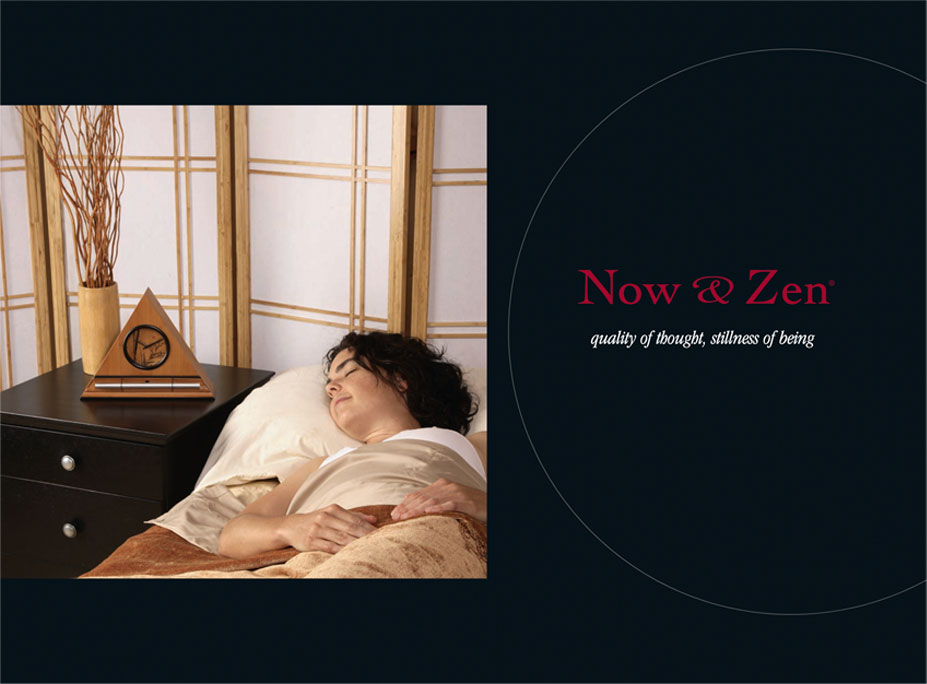
Being startled awake by a buzzer alarm, or awakened by the unpredictable noise of a clock radio, is certainly less than ideal. We fall asleep gradually and it is only natural to wake up gradually. The Zen Alarm Clock’s gradually increasing 10 minute sequence of gentle acoustic chimes or gongs makes waking up a graceful and soothing experience.
Zen Clocks “gently summon your consciousness into a waking state” in a way that helps preserve dream memories and is easy on your psyche. It also helps you replicate the gradual process of waking up naturally when your body is ready, even while adding the assurance of an alarm clock to get you up on time.
When you have a Zen Alarm Clock, you actually look forward to the morning “alarm.” Moreover, the visual and sonic beauty of the Zen Clock adds to the aesthetic beauty of your bedroom, which is another important aspect of a holistic sleep environment. Every Zen Alarm Clock comes with a 40 page booklet that describes how it can be used for dreamwork, affirmations, and meditation.
 Black Lacquer Zen Alarm Clock
Now & Zen
1638 Pearl Street
Boulder, CO 80302
Posted in Chime Alarm Clocks, Japanese Inspired Zen Clocks, Natural Awakening, Now & Zen Alarm Clocks, Progressive Awakening
Thursday, April 28th, 2011
 how to design a sacred space
Create a personal meditation space that inspires your practice and invokes your higher self.
If you’re a gardener, you know the value of choosing an ideal site and preparing quality soil for nurturing healthy plants. The same is true for tending to your inner growth: when you devote a nook in your home to your practice and sow it with your higher intentions, you create the right conditions for your spiritual life to thrive.
A dedicated space collects and focuses your energy, removes uncertainty about where to practice, and, through habit and association, helps the mind move inward more quickly and deeply. Much like an encounter with the refrigerator conjures thoughts of food, and a glance at the couch invites a comfortable sprawl, catching sight of your meditation seat in a sanctified space will evoke your deepest yearnings and inspire you to do your practice.
Choose a place that can become a sanctuary—a quiet, private space protected from outside distractions and out of public view. You may be fortunate enough to designate an entire room, but a corner in your bedroom will suffice.
You’ll need a meditation seat—traditionally known as your asana—which may be a neatly folded blanket topped by a cushion for support, or even a chair or bench. Keep any additional props needed to support a comfortable sitting posture nearby, as well as your mala, shawl, or journal; but otherwise keep the space uncluttered and scrupulously clean.
A simple altar will serve as the heart of your space, calling you to your practice by providing inspiration and focus. An altar is an acknowledgement of the deeper essence of life and a bridge to the unseen—a link between our life in the world of elements and the subtle world. All altars, even public ones, serve to remind us of meaning and purpose in life, and connect us to inner strength and guidance. In religious or ritual settings, an altar is the locus for offerings made to ancestors or deities. In the context of yoga meditation, an altar inspires an offering of inner resources rather than outward ceremony or ritual, so simplicity is key.
 Carved Wooden Thai Buddha with Singing Bowl
Try a small low table or a small chest of drawers at eye level, with a tasteful and simple covering. The objects you place upon your altar give focus, substance, and energy to your highest intentions. Traditionally, a flame (from a candle or a ghee lamp), water, flowers, fruit, and incense are offered on an altar to represent the gifts of the world given to us through the five elements. Often, these are joined by objects from a pilgrimage—a stone, sanctified water, or a sacred representation (such as a picture of Our Lady of Guadalupe or a carving of Lord Ganesha). The objects themselves are not as important as whether the altar uplifts the mind and touches the heart.
By creating a sacred space that encourages you to cultivate and nurture a devoted practice, you are one step closer to tasting the fruits of yoga—unconditional well-being and pure awareness.
adapted from Yoga International by, Sandra Anderson / co-author of Yoga: Mastering the Basics and has taught yoga and meditation for over 25 years.
 zen alarm clocks and chimes for a gentle awakening
Now & Zen
1638 Pearl Street
Boulder, CO 80302
(800) 779-6383
Posted in Chime Alarm Clocks, Well-being, Zen Timers
Sunday, April 24th, 2011
 the link between sleeping and weight
Not sleeping enough can do more than make you groggy the next day. It can also take a serious toll on your health—starting with your weight.
In the past several years, medical experts have confirmed a link between lack of sleep and weight problems, and a new study from the University of Chicago and the University of Wisconsin-Madison confirms this. Researchers conducted their study on two groups of overweight people. The first group slept for only five and a half hours each night, and the second group slept for eight and a half hours each night. The study found that while both groups lost weight, those who slept longer burned more fat, while those who slept less burned more muscle mass.
In an interview with NPR, sleep medicine expert Dr. Michael Lacey of the Atlanta Sleep Medicine Clinic explained that lack of sleep not only decreases metabolism, but also interferes with the body’s natural production of the hormones ghrelin and leptin, which regulate appetite and satiation. Too little sleep causes the body to produce too much ghrelin, which makes you feel hungry, and not enough leptin, which makes you feel satiated or full. Staying awake longer than you should will make you feel hungry when you’re really not, and will lead you to eat at times you normally wouldn’t. The longer you stay awake, the more tempted you’ll be to snack, too. To make matters worse, most people staying awake too long reach for high-carb or sugary foods, which they’re unlikely to burn off in the wee hours of the night.
Getting enough sleep will help your body burn fat and regulate weight. But how much is the right amount to get? Most sleep experts pinpoint seven to seven and a half hours as the magic sleep number. Sleep fewer than seven hours and you run the risk of fatigue and weight problems. Sleep too much and you put yourself at risk for cardiovascular disease.
adapted from Natural Home Magazine, October 2010 by Susan Melgren
 gentle alarm clock, for a slow wake-up
Now & Zen
1638 Pearl Street
Boulder, CO 80302
(800) 779-6383
Posted in Chime Alarm Clocks, Sleep Habits, Well-being, Zen Alarm Clock, sleep, wake up alarm clock
Thursday, April 14th, 2011
 yoga child's pose
Get a group of friends together and take dancing, rock climbing, or tai chi lessons once a week.
adapted from Body + Soul
 Chime Alarm Clock, a Natural Sound Alarm Clock
Now & Zen
1638 Pearl Street
Boulder, CO 80302
(800) 779-6383
Posted in Chime Alarm Clocks
Friday, April 1st, 2011
 yoga lying down
A harmonizing practice for people in recovery
As you practice the following sequence, remember to honor your limitations, going to your edge with love and acceptance rather than judgment and discouragement. If you are unable to move into a posture at this time, focus on breath-ing deeply as you think about the affirmation—that in itself is healing. At the end of the routine, take some time to write down your thoughts.
Legs-up-the-Wall Pose Viparita Karani
Benefits Relaxes the legs and feet by relieving pressure.
Affirmation As I relax, I gain insight, clarity, and ease.
Sit on the floor next to a wall, with your knees bent and your left hip and side barely touching the wall. Using your hands for support, slowly lie back and swivel your hips so that you can slide both legs up the wall and your buttocks press against it. You can let your arms relax either at your sides or on your belly.
Straighten your legs. (If you have tight hamstrings, bend your knees or move your buttocks farther away from the wall.) Hold the pose and breathe. You can place a pillow under your head or lower back for more support.
adapted from Yoga Journal by Annalisa Cunningham, author of Healing Addiction with Yoga
 Meditation Timers and Chime Clocks
Now & Zen
1638 Pearl Street
Boulder, CO 80302
(800) 779-6383
Posted in Chime Alarm Clocks, Yoga Timer, Yoga Timers by Now & Zen, yoga
Tuesday, March 22nd, 2011
 yoga
A harmonizing practice for people in recovery
lwKnee-Hug Spinal Twist Jathara Parivartanasana
Benefits Releases the lower back and lengthens the spine. Increases flexibility of the spine, back, and ribs.
Affirmation Everywhere I turn I see beauty.
Lie on your back and hug your knees into your chest. Keep your knees bent into your chest and place your arms out to your sides. Your palms can be up or down, whichever feels most comfortable to you. Inhale. As you exhale, move your hips and knees to the left as you turn your head to the right. Hold the position and breathe. When you are ready, do a gentle spinal twist to the other side.
adapted from Yoga Journal by Annalisa Cunningham, author of Healing Addiction with Yoga
Posted in Chime Alarm Clocks, Yoga Timer, Yoga Timers by Now & Zen, yoga
Monday, March 21st, 2011
 yoga practice
A harmonizing practice for people in recovery
As you practice the following sequence, remember to honor your limitations, going to your edge with love and acceptance rather than judgment and discouragement. If you are unable to move into a posture at this time, focus on breath-ing deeply as you think about the affirmation—that in itself is healing. At the end of the routine, take some time to write down your thoughts.
Benefits Releases the lower back and lengthens the spine.
Affirmation I hold myself with compassion.
Lie on your back and bring your knees in toward your chest. Wrap your arms around your knees and legs, hugging them toward you. Keep your chin slightly tucked so your neck stays long on the floor.
Hold the position and breathe.
adapted from Yoga Journal by Annalisa Cunningham, author of Healing Addiction with Yoga
 Bamboo Zen Clocks and Chime Timers, a Natural Sound Alarm Clock
Now & Zen
1638 Pearl Street
Boulder, CO 80302
(800) 779-6383
Posted in Chime Alarm Clocks, Yoga Timer, Yoga Timers by Now & Zen, yoga
Saturday, March 19th, 2011
 seated forward bend
A harmonizing practice for people in recovery
As you practice the following sequence, remember to honor your limitations, going to your edge with love and acceptance rather than judgment and discouragement. If you are unable to move into a posture at this time, focus on breath-ing deeply as you think about the affirmation—that in itself is healing. At the end of the routine, take some time to write down your thoughts.
Benefits Helps stretch the hamstrings and lower back. It also fosters a sense of calm and letting go, while gently stretching the spine.
Affirmation I move forward with patience.
Sit on the floor with your legs extended in front of you. Sit up straight and rotate your ankles, flexing and stretching them. Keeping your feet flexed, inhale and lift your arms above your head. As you exhale, bend at the hips and lower your chest toward your knees. Keep your spine straight as you do this. Place your hands on your calves, ankles, or feet, wherever you can comfortably reach. Hold the pose for 10 breaths.
adapted from Yoga Journal, by Annalisa Cunningham, author of Healing Addiction with Yoga
 Zen Alarm Clock with Gentle Chime for Stress Reduction
Now & Zen
1638 Pearl Street
Boulder, CO 80302
(800) 779-6383
Posted in Chime Alarm Clocks, Well-being, Yoga Timer, Yoga Timers by Now & Zen, mindfulness practice, yoga
Tuesday, March 15th, 2011
 meditation for relaxation
It’s no surprise that being consumed with anger can bring on a headache. But worse than expressing your ire is not expressing it. According to researchers at the St. Louis University School of Medicine, bottling up rage may play a bigger role in head pain than anyone ever imagined. Psychologist Robert Nicholson asked 422 people various questions meant to uncover their headache triggers, and the answers pointed to one thing: “Holding in anger was the most important emotional factor in whether or not they were going to experience headaches,” says Nicholson. Why does allowing your frustration to fester bring on the pain? “I wish I had a good answer,” Nicholson says. “We’re getting research underway to figure out the physiology behind it. Muscle tension probably plays a role, but some people think there’s also some interaction of the emotional component of the brain with pain receptors.” Whatever those pathways turn out to be, the answer isn’t just to let anger fly but to figure out ways to keep it from eating away at you. Experts advise learning relaxation techniques, such as deep breathing, yoga, meditation, or biofeedback. You might also want to see a therapist who can help you learn healthy ways to express your anger. Your head—and your friends—will thank you.
adapted from Natural Solutions, October 2003
 Meditation Timers with Chime, a natural acoustic sound not electronic
Now & Zen
1638 Pearl Street
Boulder, CO 80302
(800) 779-6383
Posted in Chime Alarm Clocks
Monday, March 14th, 2011
 stop stressing
Convinced it will rain on the party you’re planning this weekend—and it’s only Monday? Turns out, those six days of unnecessary, perceived stress quite literally can make you “worried sick,” according to a new study.
Perceived stress versus actual stress: “Actual stress is something you experience in the moment, like a giving a presentation at work, or fighting with your spouse,” says Jim Claussen, a chiropractor from Chicago. On the other hand, if you’re worried about the economy crashing or your 401(k), then you’re stressing over something you have no control over, and your stress is perceived, he says. Your body can recover from actual stress, but long-term perceived stress puts you in constant fight-or-flight mode, fatigues your adrenals, and compromises your immune system. “It’s as if you were to prop your car up on blocks, weigh the gas pedal down, and let it run all night,” says Claussen. “You can’t expect to walk into the garage the next morning and have any gas left.” The study found that people with the highest perceived stress had 80 percent fewer protective antibodies in their blood than those who were actually stressed out. Try these tips to help you chill out:
Put stress on a shelf. “It’s definitely an art,” says Claussen, “but if you can find an off button for your stressor, you’ll waste a lot less time and effort worrying about something you can’t control.” Remember that party you’re fretting about? Put your worries about the weather “on the shelf,” and come Saturday when it’s time to deal, “pull it off the shelf.”
Breathe with your belly. Lie down on the floor with a book on your belly. Inhale through your nose, feel the book rise, and hold for four seconds. Exhale all the air out through your mouth, letting the book lower. Repeat four times. Deep inhales stimulate your lungs and trigger the parasympathetic nervous system to put you in a calming state while deep exhales help drain the lymphatic system.
Meditate. Set your Zen Timer with chime for 30 minutes. Take these 30 minutes out of your day to meditate, do yoga, or t’ai chi to help reduce stress hormones, slow down your heart rate and blood pressure, and balance your system.
adapted from Natural Solutuons, by Nicole Duncan, February 2009
 Yoga Timers with gentle chimes
Now & Zen
1638 Pearl Street
Boulder, CO 80302
(800) 779-6383
Posted in Chime Alarm Clocks, Well-being
« Previous Entries
Next Page »
|
|
|
|
|
|
 |
|
|
 |
|
|
|
Contact Us
|
Wholesale Inquiries
|
Contact Customer Service
|
Catalog Request
|
Gift Cards
|
Product Videos
|
|
Copyright © 2012 Now & Zen, Inc., Boulder Colorado, USA all rights reserved.
Sitemap |
Privacy
|
|
|