|
Secure Site
|
 |
Archive for the 'Japanese Inspired Zen Clocks' Category
Tuesday, June 28th, 2011
 Ukiyo-e Madame Print
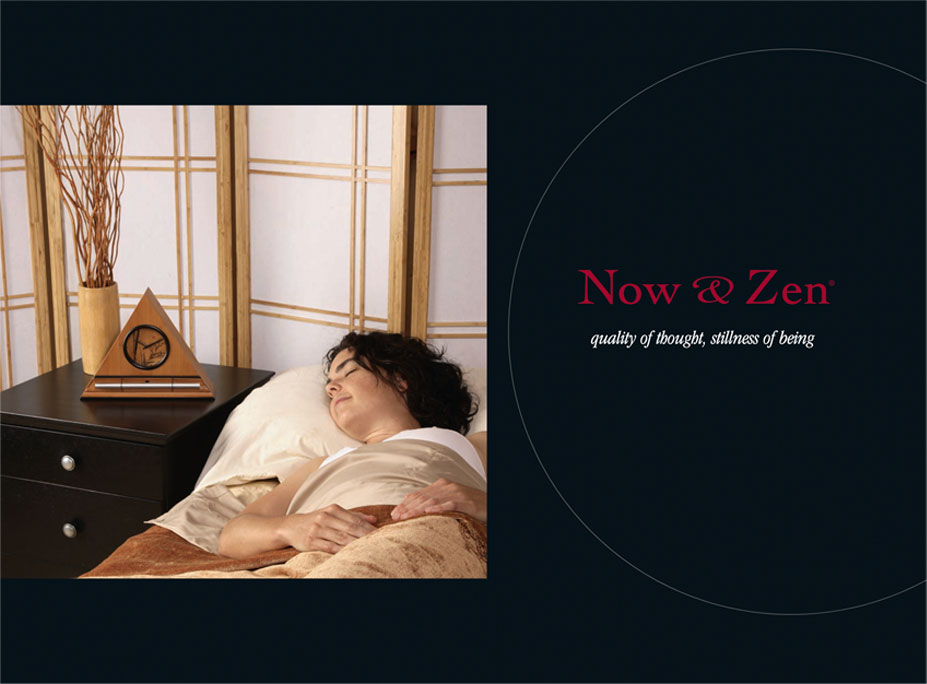
Being startled awake by a buzzer alarm, or awakened by the unpredictable noise of a clock radio, is certainly less than ideal. We fall asleep gradually and it is only natural to wake up gradually. The Zen Alarm Clock’s gradually increasing 10 minute sequence of gentle acoustic chimes or gongs makes waking up a graceful and soothing experience.
Zen Clocks “gently summon your consciousness into a waking state” in a way that helps preserve dream memories and is easy on your psyche. It also helps you replicate the gradual process of waking up naturally when your body is ready, even while adding the assurance of an alarm clock to get you up on time.
When you have a Zen Alarm Clock, you actually look forward to the morning “alarm.” Moreover, the visual and sonic beauty of the Zen Clock adds to the aesthetic beauty of your bedroom, which is another important aspect of a holistic sleep environment. Every Zen Alarm Clock comes with a 40 page booklet that describes how it can be used for dreamwork, affirmations, and meditation.
 Black Lacquer Zen Alarm Clock
Now & Zen
1638 Pearl Street
Boulder, CO 80302
Posted in Chime Alarm Clocks, Japanese Inspired Zen Clocks, Natural Awakening, Now & Zen Alarm Clocks, Progressive Awakening
Sunday, June 26th, 2011
 Cherry Blossoms
Beyond the psychological inquiry into dreams or the self-improvement techniques of affirmations lies the ancient and sacred practice of meditation. Some form of meditation is practiced in every major world religion. Yogis, Christian mystics, Zen Buddhists, Quakers, practitioners of the Kabbalah, and Secular Humanists, all experience the benefits of meditation.
 A Moment of Stillness in Nature
The Zen Timepiece is an exquisite “accoutrement to meditation.” It can be used in a variety of ways to aid your practice and encourage you to “make time” to meditate. The first and most basic use of the Zen Timepiece in your meditation practice is as a signal of the end of your allotted meditation time.
If you want to meditate for twenty minutes, simply set the countdown timer for twenty minutes and begin your meditation. When the countdown timer reaches zero and the bowl/gong is struck, you can choose to end there or continue your meditation for about three and a half minutes until the next bowl strike, or even longer. Many meditators find that a “three and a half minute warning” is a perfect interval in which to gradually conclude their longer meditations. The first strike signals the final phase of the meditation and the second strike its conclusion. The beauty of the brass bowl/gong is that it complements rather than disturbs the meditative state while acting as an effective timer. No matter how you use it, the sonic clarity of the brass bowl provides an appropriate conclusion to your stillness.

- Now & Zen Headquarter Store, Boulder, CO
The bowl that comes with the Zen Timepiece is made from the following five metals: copper, zinc, lead, iron, and tin. It has been formed using the same forging techniques that have been used in Asia for two thousand years. Unlike hand-hammered Himalayan-style bowls, our Zen Timepiece’s rin gong bowl is made using methods which first appeared in Japan in the first century. Following these traditions, your bowl’s long-resonating tone has been carefully selected to bring beauty and harmony to your environment.
Posted in Japanese Inspired Zen Clocks, Meditation Timers, Meditation Tools, Natural Awakening, Now & Zen Alarm Clocks, Progressive Awakening, Yoga Timers by Now & Zen, Zen Timepiece by Now & Zen, Zen Timers
Friday, November 26th, 2010
 create a sacred place to be mindful
Is there a place in your home or yard where you can let go, relax, and renew your awareness of transcendent, loving oneness? It doesn’t take much to create such a place.
Your can create your healing retreat —a garden, a teahouse, a room—or you can claim one that already exists—a window seat, a rock by a stream. Your haven can be a balcony with potted plants and a wind chime, a hot tub surrounded by lavender, a bedroom where you have banished all distractions, or a comforter you roll up in like a cocoon. It needn’t even be a particular place; it can be an experience you recreate each time you need it, like a candlelight bubble bath with fresh flowers and Mozart.
There are no rules about how to create a personal haven, but consider incorporating some of these features (let your heart and your gut guide you):
• A gateway or marked entry to set it aside as sacred
• Privacy (freedom from interruptions and demands)
• A place to rest (a bed, hammock, comfortable stool)
• Calming colors
• Curved shapes
• Soft textures
 create a sacred space in your house
• Plants
• Objects of beauty
• Simplicity, absence of clutter
• Soothing sounds (birdsong, moving water, music, wind chimes)
• Sunlight or soft, warm electric light
• Pleasing scents
• The four elements: air, earth (the ground, stones), water (in a bowl, fountain, or body of water), fire (sun, candles, a fire)
• A long vista, if there’s a pleasant one available
• Symbols of calm, transcendence, love, nourishment (hearts, stars, sun, moon, angels, personal treasures)
You deserve it
If you are like most people, the hardest part isn’t finding or creating a sanctuary; it’s believing that you deserve to spend time there. We tend to be so overwhelmed with demands that time taken away from meeting them feels like time wasted. We somehow learned that doing something just because it feels good is detrimental to others. Question these assumptions.
In fact, great inspiration, beautiful works of art, and profound love arise from the experience of unstructured time. In quiet, we can hear our muses and feel our passions. Here we can dream freely and drink from the deep well of our source. The peace we find carries into all our actions and relationships. What better gift can we give the world?
adapted from Natural Home Magazine, January/February2004 by Carol Venolia
Carol Venolia is an architect, author of Healing Environments: Your Guide to Indoor Well-Being (Celestial Arts, 1988), and former publisher of Building with Nature Newsletter.
 interiors that create well-being
Now & Zen
1638 Pearl Street
Boulder, CO 80302
(800) 779-6383
Posted in Beauty, Chime Alarm Clocks, Japanese Inspired Zen Clocks, Meditation Timers, Meditation Tools, Well-being, Zen Timers, intention, mindfulness practice
Saturday, November 20th, 2010
 The Dream-Health Connection
Physicians in early Egypt and ancient Greece encouraged people to recall their dreams when seeking medical advice. Mexican and Native American shamans have long considered dream interpretation important for both healing and spiritual awareness. Tibetan medicine views dream work as a path to self-discovery, an awareness that can help create an inner balance — and inner balance contributes to good health.
The Dream-Health Connection
Indeed, the study of dreams in relation to health is gaining acceptance in the scientific community. One study reveals that the role of REM sleep and noting dream variables may be significant in helping patients gain quicker remission from marital separation-related depression (Psychiatry Research, 1998, vol. 80). Other research finds that dream content reflects waking life stressors in people with insomnia. Several studies tracked cancer patients’ dream series and reported that their dreams may have pointed to early cues for the presence of the disease process.
Katherine O’Connell, Ph.D., a clinical psychologist, dream analyst and founder of the Dream Institute in Santa Cruz, Calif., says that “listening to dreams can save your life.” She notes that dreams not only reveal symbols for health issues that need to be resolved, but they often reveal the herbal remedy for the problem — a method of medical dream work that dates back to ancient Egypt and Greece. For example, O’Connell finds that her clients often dream of flowers or herbs that are traditionally used to treat the ailments their physicians diagnose.
In her dream-work journey, O’Connell has studied dream medicine with Tibetan lamas and researched 3,500-year-old Egyptian homeopathic remedies used for dream recall. Through the process, she has also collected more than 5,000 dreams — her own and those of clients — for analysis.
O’Connell believes that viewing your dreams as a series is the best way to understand the complete picture of your physical and psychological health. She suggests writing your dreams down, then reviewing common threads that run through them. “I see dream work as a good mystery story with many chapters,” she says. “With each chapter, we gain more clues along the way.”
Cultivating Dream Awareness
To access the clues in your dreams, start with your knowledge of yourself. While dream symbol books can serve as loose guides, dream interpretation is really an individual matter. For example, the color green may represent money to your spouse but symbolize healing energy to you. Likewise, a spider can be your personal symbol of creativity whereas it may signal a venomous threat to someone else; similar dream images often have different interpretations for different people. So it’s important to tap into your own associations, feelings and intuition about your dream symbols. “We have such innate wisdom. We must remember to trust ourselves,” O’Connell says.
Want to be more in touch with your dreams? ASD offers the following tips:
- Remind yourself to remember your dreams before you fall asleep.
- Keep a pad of paper and pen or tape recorder by your bedside. As you awaken to your chiming Zen Alarm Clock , try to move as little as possible and try not to think right away about your upcoming day. Instead, immediately write down your dreams and dream images, as they can fade quickly if not recorded.
- Influence your dreams by giving yourself pre-sleep suggestions. Before going to bed, write down your agenda. Or say aloud what you want to know to strengthen the conscious-subconscious dream connection.
- Forgo taking alcohol or stimulants such as coffee or caffeinated tea before bed, as these substances interfere with REM sleep. Also, try taking a warm bath with a few drops of chamomile or cedar essential oil (first diluted in a carrier oil such as almond or walnut), or try practicing a few minutes of meditation to clear your mind for restful sleep and clearer dreams. Dreams not only have the potential to enhance your health but, as Jungian analyst Marie-Louise von Franz says, “Dreams show us how to find meaning in our lives, how to fulfill our own destiny and how to realize the greater potential of life within us.”
Sweet dreams.
adapted from Delicious Living, October 2000 by Deborahann Smith
 Zen Alarm Clocks with a progressive chime that doesn't interrupt your dreams
Now & Zen
1638 Pearl Street
Boulder, CO 80302
(800) 779-6383
Posted in Dreams, Japanese Inspired Zen Clocks, Natural Awakening, Sleep Habits, Zen Alarm Clock, sleep
Wednesday, November 17th, 2010
 walking in waves, a mindfulness meditation
There is nothing more soul-renewing than a very long, meandering, aimless walk. And I do mean aimless — as in, “I’m heading out! I have no idea how long I’ll be or where I’m going!”
I started walking this way quite by accident, in the midst of recovering from the heartache and confusion of losing my job. I had been slothful through winter, alternating between insomnia and sleeps so deep I wasn’t sure what day it was when I woke. But with the changing light of spring, I was beckoned out of doors.
Finding Peace Amidst the Chaos
I was in Manhattan, and cities are excellent places for meditative walks. They’re full of interruptions and distractions, but there is always a bus stop or a person with directions within easy distance. So you can suspend the anxiety about getting lost or getting home.
And all that noise does for humans what shape does for bats: Even if we aren’t tuning into it, it guides our steps and signals danger or direction.
A city walk also delivers the pleasure of unexpected architectural discoveries: trolls clinging to the corners of buildings, swags of flowers carved into stone friezes.
These days I’m walking in the country, in coastal Rhode Island, where the blackbirds and foxes keep me company.
“Exploring the world is one of the best ways of exploring the mind,” writes Rebecca Solnit in “Wanderlust: A History of Walking.” The mind eventually begins to follow the feet, and a logjam of anxiety starts to come loose.
 Soul-Renewing Walking Meditation
From Type A to Point Be
Long walks are the cure for writer’s block, lover’s block, mother’s block, friendship block, and any other kind of obstacle that we try to deliberately gnaw our way through, worrying over the problem and getting nowhere.
Better to let yourself really go nowhere and experience the delicious paradox of losing yourself to find yourself.
Walking with indirection has, at heart, a paradoxical benefit. When you stop making decisions for a little while, before you know it, you are filled with purpose, and the goals and paths of your life take on a new clarity.
It is by such grace that life unfolds; how lovely to suspend disbelief (I will never feel good again) and arrive at conviction: Life is wonderful! What a joy to be moving!
How-To: Walking as Meditation
1. Focus on your breathing. Paul Smith, walking-meditation instructor at Lake Austin Spa Resort in Austin, Texas, recommends inhaling slowly through your nose for 4 steps, keeping your breath in for 2 steps, exhaling for 4 steps, then waiting 2 steps before inhaling again.
2. Gently corral your wandering mind. Try repeating an affirmation in time with your breathing and steps. Smith recommends phrases such as “My life is a pleasure,” “I speak the truth and listen without judging,” or “I see all things in clarity.” Another trick: Visualize putting your worrisome thoughts in a balloon and letting go of the string.
3. Hold one hand behind your back. This will help slow you down. “Don’t let yourself get into race-walking mode,” Smith says.
4. Pay attention to your senses. Focus on vision first, which is easiest. Notice a plane overhead, leaves in the trees. Then notice sounds around you, the sun on your face, the smell of cut grass. Smith says, “These are ways to stay in the present.”
5. On a practical note: If you’re walking for distance, carry a little “mad money” in case you tucker out miles away. But no cell phone — or turn it off if you must have it on you.
adapted from Wholeliving.com, September 2010 by Dominique Browning
 Hokusai Wave Zen Meditation Timer and Alarm Clock
Now & Zen
1638 Pearl Street
Boulder, CO 80302
(800) 779-6383
Posted in Chime Alarm Clocks, Hokusai Wave, Japanese Inspired Zen Clocks, Meditation Timers, Meditation Tools, Walking Meditation, Well-being, Zen Timers, intention, mindfulness practice, nature
Sunday, November 14th, 2010
 mind-body therapies help your heart
Research shows that the stress-inflammation cycle is as detrimental to your heart as a plate full of the cheesiest fettuccine Alfredo. “Stress hormones, such as adrenaline and cortisol, cause the arteries to constrict, which results in a rise in blood pressure and decrease in blood flow,” Moyad explains. Less blood flow means less oxygen circulating through the body to combat free radicals—unstable cells that can damage healthy tissues. “We know now that bad LDL cholesterol only becomes threatening when levels get so high that it binds with free radicals,” Moyad says. When this happens, LDL changes structure and gets absorbed by the arterial walls’ lining, resulting in plaque buildup, or atherosclerosis. Such tissue damage causes the immune system to go into overdrive, triggering inflammation. Reduce your risk with effective mind-body therapies like meditation, yoga, exercise or massage.
adapted from Natural Solutions Magazine, January 2010 by Kate Hanley
 bamboo meditation timer and natural alarm clock with gentle chime
Now & Zen
1638 Pearl Street
Boulder, CO 80302
(800) 779-6383
Posted in Beauty, Chime Alarm Clocks, Japanese Inspired Zen Clocks, Meditation Timers, Meditation Tools, Natural Awakening, Well-being, Yoga Timer, Yoga Timers by Now & Zen, Zen Timers, intention, mindfulness practice, nature, yoga
Wednesday, November 3rd, 2010
 progressive chime clock can help reduce stress and help avoid lack of sleep
Although the occasional all-nighter is OK, people who regularly skimp on z’s can’t undo sleep deprivation’s detrimental effects by simply sleeping later on on weekends, says a new study in the journal Science of Translation Medicine. Contrary to popular belief, the energy you feel after a Saturday morning sleep session is only short lived, according to the study. Chronic sleep loss has a cumulative effect on performance. Why? Lack of sleep raises levels of the stress hormone cortisol and affects a person’s ability to respond to stimuli, says Catherine Darley, ND, founder of Seattle’s Institute of Naturopathic Sleep Medicine. Sleep also plays a key role in mood regulation and overall physical and mental functioning. If you need some extra help falling asleep, try a natural insomnia supplement made with melatonin, tryptophan, or valerian. Inquire at your local health food store.
 Progression Alarm Clocks for a Gradual Awakening
When you have found the perfect routine for falling asleep remember to wake yourself gently so that you can start the day with grace. Set your Zen Alarm Clock 10 minutes earlier than you need to get up so that you can slowly awken in the morning. The Zen Alarm Clock’s long-resonating Tibetan bell-like chime makes waking up a beautiful experience — its progressive chimes begin your day with grace. When the Clock’s alarm is triggered, the acoustic chime bar is struck just once … 3-1/2 minutes later it strikes again … chime strikes become more frequent over 10 minutes … eventually striking every 5 seconds until shut off (see the chime progression graph, below). As they become more frequent, the gentle chimes will always wake you up — your body really doesn’t need to be awakened harshly, with a Zen Clock you’re awakened more gradually and thus more naturally.
adapted from Natural Solutions Magazine, May 2004 by Leslie Crawford
 Chime Alarm Clock - Progressive Wake-Up Clock with Natural Acoustic Chime
Now & Zen
1638 Pearl Street
Boulder, CO 80302
(800) 779-6383
Posted in Bamboo Chime Clocks, Chime Alarm Clocks, Japanese Inspired Zen Clocks, Sleep Habits, sleep
Sunday, October 10th, 2010
 meditation may increase compassion
Meditation might be your prescription for a happier mind and kinder heart, a new University of Wisconsin-Madison study shows. Scientists worked with 16 Tibetan monks and 16 meditation novices, giving the beginners lessons on compassion meditation two weeks prior to a series of brain-scan experiments. Those brain scans — taken while the participants responded to different emotional cues — revealed that the monks had more activity in certain brain regions involved in processing empathy. The findings, according to study authors, suggest that meditation may train the brain to increase feelings of compassion and happiness.
To start your own meditation practice, try this exercise created by “Untrain Your Parrot” author Elizabeth Hamilton:
- Set your Zen Meditation Timer with Gong for 20 minutes.
- Sitting with your spine erect, breathe deeply, placing your fingertips over the center of your chest if you like.
- As you inhale, picture a person to whom you want to extend compassion. As you exhale, silently say, “May compassion awaken.” Inhale and exhale for several breaths, focusing on the center of your chest.
- Recalling the person, silently say, “May whatever clouds compassion be healed.” Repeat this cycle with the phrase, “May this moment be experienced, exactly as it is,” and finally, “May compassion be extended to all.”
- Repeat the exercise for 20 minutes until your Zen Timer Gongs.
adapted from Body + Soul Magazine, August 2007
 Zen Timepiece, a brass singing bowl clock and timer for meditation and yoga
Now & Zen
1638 Pearl Street
Boulder, CO 80302
(800) 779-6383
Posted in Japanese Inspired Zen Clocks, Meditation Timers, Meditation Tools, Now & Zen Alarm Clocks, Well-being, Zen Timepiece by Now & Zen, Zen Timers, intention, mindfulness practice, zen monks
Wednesday, October 6th, 2010
 mindful walking
When you apply a few simple techniques, you can turn your daily walk into a rewarding practice.
What is mindful walking? It’s a technique that uses awareness of the mind/body connection to improve the quality of your walking experience on all levels. By approaching a walk in a mindful way, you make it a practice like yoga, meditation, or tai chi; every session brings new insights and challenges. As in yoga, you think about your body position, breathing, movements, and awareness, turning inward and outward at the same time. You’re working to get fit, and to improve your life as a whole. Treat walking as a practice, and it will become not only something you do with your legs but also a way to bring your mind, body, and spirit into balance.
Five Steps to Make Walking a Mindful Practice
Identify your intention. The key to any mindful activity, intention provides focus and motivation, elevating your practice from routine to ritual. What is your intention? To walk for an hour every day? To develop a sense of centeredness and calm? To reduce stress? Your goals and intentions will evolve as you evolve. Let them, as long as they keep you in line with your higher sense of purpose — and keep you moving forward.
Be consistent. A true practice requires ongoing attention. Of course, it’s natural to feel resistant at times, no matter what kind of activity you do. Your mind will create a thousand excuses not to walk today. Don’t let these passing thoughts distract you from your deeper intention. Get moving; start walking around your office or home, or wherever you are. You can quiet the mind by moving your body and get yourself back on track.
 train your mind to focus
Train your mind to focus. The mind loves — and craves — engagement. Without something to focus on, it will tend to wander, taking your practice with it. By learning to focus, you will be able to walk more efficiently.
Listen to your body. As with any relationship, the connection between mind and body depends on how well one listens to the other. Our tendency is to try to rule the body with the brain; however, they are more like equal partners, offering feedback and direction as you go. Listen to what your body is trying to tell you by noticing any sensations that come up while you’re walking. You may feel energized as your leg muscles engage or relaxed as your breathing deepens. If you detect any complaint from your body, such as pain or discomfort, identify the source. Then make small adjustments in your technique and see whether the sensation lessens.
Embrace the process. Goals provide a greater context for your practice. But building patient awareness of the process is even more important. Sometimes walking will feel easy and rewarding; other times, more like a chore. As part of a mindful practice, you accept the challenge as part of the process and continue to stick with it. My tai chi master sees difficulty as an opportunity — a lesson to be learned. Accepting all of these parts of the process lies at the heart of making walking a mindful exercise.
adapted from Body + Soul Magazine, April/May 2006
 Meditation Timer, The Digital Zen Alarm Clock in Solid Walnut
Now & Zen
1638 Pearl Street
Boulder, CO 80302
(800) 779-6383
Posted in Japanese Inspired Zen Clocks, Now & Zen Alarm Clocks, Uncategorized, Well-being, Zen Timers, mindfulness practice
Monday, October 4th, 2010
 zen appreciation
If you have been browsing on-line you may have seen a Google Ad-words for the search term “Buddhist alarm clock” that leads to our website www.Now-Zen.com.
“Buddhist Alarm Clock” is not a product name or search term we created, but instead one that people have been using on their own. We are the makers of the world famous “Zen Alarm Clock” and although we are using the word “Zen” as part of our trademark, we are not trying to associate directly with Buddhism or any other organized religion. We have no control over “Buddhist Alarm Clock” being used by Google.
The founders of our company have great respect for the spiritual teachings and the aesthetic achievements of Buddhism, but we also respect and appreciate a wide variety of other spiritual paths as well. Zen is the name of an ancient form of Japanese Buddhism, but ever since Robert Pirsig’s famous book, Zen And The Art of Motorcycle Maintenance, was published in 1974, the word “Zen” has come to have a larger meaning within American popular culture. Zen also connotes a sort of nondenominational metaphysical quality that transcends any particular spiritual forms or teachings. The word evokes the image of a beautiful rock garden or a weather beaten pine tree on a windswept mountainside.
The timeless aesthetics of Zen Buddhism did provide inspiration for our Zen Alarm Clock, but the design also arose from other influences, such as the sublime patterns of sacred geometry. We thus use the word “Zen” in the name of our product as a kind of lighthearted tribute to progressive spiritual culture. But, as we have been careful to explain over the 15 years we have been in business, we make products for both spiritual and non-spiritual people and we are not directly associated with Buddhism or any other specific form of spirituality.
Our motto is “quality of thought, stillness of being” and we hope that this is the kind of spiritual message that everyone can appreciate.
We apologize any confusion that the Ad-words search term “Buddhist Alarm Clock” may have caused. If you continue to have any questions at all, please contact us or visit www.now-zen.com for more information.
Posted in Chime Alarm Clocks, Japanese Inspired Zen Clocks, Natural Awakening, Now & Zen Alarm Clocks, Progressive Awakening, zen
« Previous Entries
Next Page »
|
|
|
|
|
|
 |
|
|
 |
|
|
|
Contact Us
|
Wholesale Inquiries
|
Contact Customer Service
|
Catalog Request
|
Gift Cards
|
Product Videos
|
|
Copyright © 2012 Now & Zen, Inc., Boulder Colorado, USA all rights reserved.
Sitemap |
Privacy
|
|
|