Now & Zen, Inc - 800-779-6383
Zen Alarm Clock Digital Zen Alarm Clock Zen Timepiece Zen Doorbell Tibetan Phone Bell & Timer Integral Consciousness

Secure Site

Now & Zen Blog

Archive for the 'Natural Awakening' Category

Choosing an alarm Clock, wake up more naturally

Wednesday, June 29th, 2011
Zen Alarm Clocks for a Gradual Awakening

Zen Alarm Clocks for a Gradual Awakening

One of the ultimate Zen like experiences is waking-up from a great slumber refreshed and energized. Your mind and body are harmoniously one, both alert and focused. Having a refreshed mind and body are two keys to a natural and Zen lifestyle. Waking up in the morning should not be a loud and abrupt awakening, but rather it should be a peaceful positive experience.  The right natural alarm clock can transition your deep and tranquil sleep into a serene start to consciousness. Imagine a long-resonating Tibetan bell-like chime waking you up to a beautiful morning experience.

The right alarm clock can be the most beneficial investment for you. With our Now & Zen natural alarm clock you are awakened more gradually and thus more naturally. Now & Zen is focused on creating a naturalistic lifestyle, and our clocks are an example of our philosophy.

Our natural alarm clocks begin your day with grace. When the Clock’s alarm is triggered, an acoustic chime in our clock is struck just once, and strikes again in 3-1/2 minutes, and again in intervals of 10 minutes. The combination of calming chimes and intervals creates a serene start to your day. “Now & Zen natural alarm clock, wake up peacefully.”

Posted in Natural Awakening, Now & Zen Alarm Clocks, Progressive Awakening


Mindfulness bells and chimes by Now & Zen Inc.

Wednesday, June 29th, 2011
Stillness

Stillness

In the larger scheme of things, our days on this planet are few and precious, so it seems fitting that we should begin each day with grace and beauty. Used as an alarm clock, your Zen Timepiece thus serves as a useful reminder that each day is a new and sacred opportunity to live life to its fullest.

Zen Timepiece in Maple

Zen Timepiece in Maple

But in addition to its use as an alarm clock, your Zen Timepiece is also an aesthetically-sophisticated timer that enhances practice activities and social gatherings. It can also serve as a “mindfulness bell” that periodically calls you to stillness.

Founded in Boulder, Colorado in 1995, Now & Zen’s mission is to create natural lifestyle products that make a real difference in people’s lives. The growing preference for natural foods and natural fibers is carried forward by Now & Zen in the natural acoustic sounds and natural hardwood materials featured in every Now & Zen product. Our way of describing the essence of a natural lifestyle is: quality of thought, stillness of being.

Posted in Meditation Timers, Meditation Tools, Natural Awakening, Now & Zen Alarm Clocks, Zen Gardens, Zen Timepiece by Now & Zen, Zen Timers


How you wake up in the morning is an important part of your sleep experience

Tuesday, June 28th, 2011
Ukiyo-e Madame Print

Ukiyo-e Madame Print

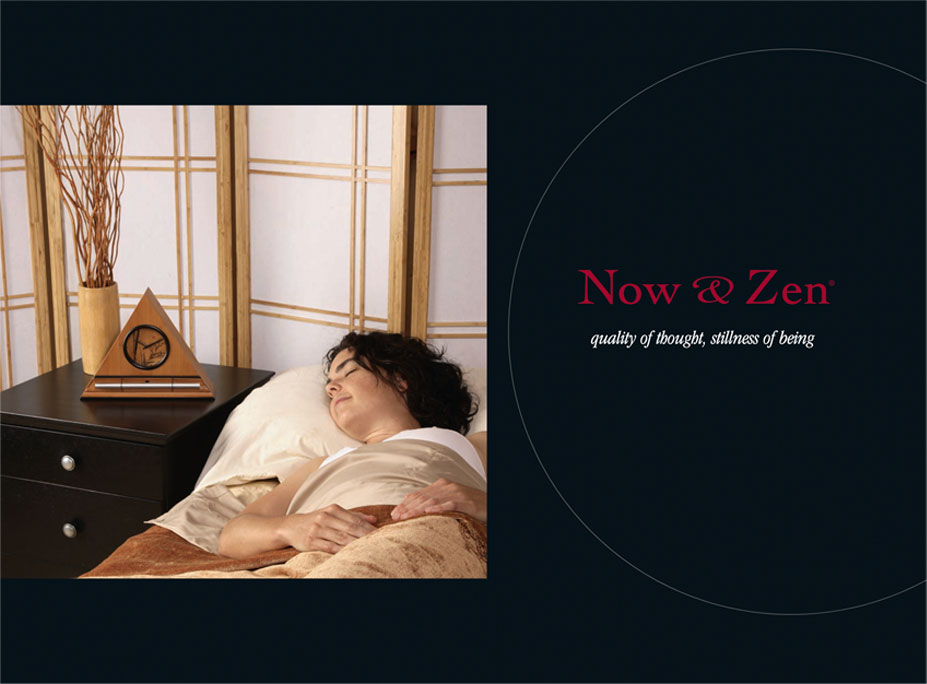
Being startled awake by a buzzer alarm, or awakened by the unpredictable noise of a clock radio, is certainly less than ideal.  We fall asleep gradually and it is only natural to wake up gradually.  The Zen Alarm Clock’s gradually increasing 10 minute sequence of gentle acoustic chimes or gongs makes waking up a graceful and soothing experience. 

Zen Clocks “gently summon your consciousness into a waking state” in a way that helps preserve dream memories and is easy on your psyche.  It also helps you replicate the gradual process of waking up naturally when your body is ready, even while adding the assurance of an alarm clock to get you up on time. 

When you have a Zen Alarm Clock, you actually look forward to the morning “alarm.”  Moreover, the visual and sonic beauty of the Zen Clock adds to the aesthetic beauty of your bedroom, which is another important aspect of a holistic sleep environment.  Every Zen Alarm Clock comes with a 40 page booklet that describes how it can be used for dreamwork, affirmations, and meditation.

Black Lacquer Zen Alarm Clock

Black Lacquer Zen Alarm Clock

Now & Zen

1638 Pearl Street

Boulder, CO  80302

Posted in Chime Alarm Clocks, Japanese Inspired Zen Clocks, Natural Awakening, Now & Zen Alarm Clocks, Progressive Awakening


Zen Clocks for meditation

Sunday, June 26th, 2011
Cherry Blossoms

Cherry Blossoms

Beyond the psychological inquiry into dreams or the self-improvement techniques of affirmations lies the ancient and sacred practice of meditation.  Some form of meditation is practiced in every major world religion.  Yogis, Christian mystics, Zen Buddhists, Quakers, practitioners of the Kabbalah, and Secular Humanists, all experience the benefits of meditation.
A Moment of Stillness in Nature

A Moment of Stillness in Nature

The Zen Timepiece is an exquisite “accoutrement to meditation.”  It can be used in a variety of ways to aid your practice and encourage you to “make time” to meditate.  The first and most basic use of the Zen Timepiece in your meditation practice is as a signal of the end of your allotted meditation time.

If you want to meditate for twenty minutes, simply set the countdown timer for twenty minutes and begin your meditation.  When the countdown timer reaches zero and the bowl/gong is struck, you can choose to end there or continue your meditation for about three and a half minutes until the next bowl strike, or even longer.  Many meditators find that a “three and a half minute warning” is a perfect interval in which to gradually conclude their longer meditations.  The first strike signals the final phase of the meditation and the second strike its conclusion.  The beauty of the brass bowl/gong is that it complements rather than disturbs the meditative state while acting as an effective timer.  No matter how you use it, the sonic clarity of the brass bowl provides an appropriate conclusion to your stillness.

Now & Zen Headquarter Store, Boulder, CO

The bowl that comes with the Zen Timepiece is made from the following five metals: copper, zinc, lead, iron, and tin.  It has been formed using the same forging techniques that have been used in Asia for two thousand years.  Unlike hand-hammered Himalayan-style bowls, our Zen Timepiece’s rin gong bowl is made using methods which first appeared in Japan in the first century.  Following these traditions, your bowl’s long-resonating tone has been carefully selected to bring beauty and harmony to your environment.

Posted in Japanese Inspired Zen Clocks, Meditation Timers, Meditation Tools, Natural Awakening, Now & Zen Alarm Clocks, Progressive Awakening, Yoga Timers by Now & Zen, Zen Timepiece by Now & Zen, Zen Timers


Zen Alarm Clock – A gentle awakening is best for our physical and mental well-being

Saturday, June 25th, 2011
Bamboo Zen Clock

Zen Clocks by Now & Zen

It would be nice if we could wake up every morning without an alarm.  We fall asleep gradually, and it seems only natural that a gentle awakening is best for our physical and mental well-being.  Some people wake up naturally at the same time every morning without any outside stimulus.  But for most of us, an alarm clock is essential.  The natural desire for a gradual awakening accounts for the popularity of “snooze buttons” on alarm clocks.  But even the minimal effort required to push a snooze button can disrupt the experience of waking up gradually.

Gentle Awakening

Gentle Awakening

The benefits of a more natural “progressive awakening” include better dream recall, prolonged alpha brain wave activity (in which you can make powerful suggestions to your preconscious mind), as well as a general feeling of being refreshed after a good night’s rest.

Well-being

Well-being

The Zen Alarm Clock’s chime strikes become gradually more frequent over a ten minute period.  The chimes progress according to a “golden ratio progression,” which is an ancient formula of sacred geometry used as a formula for beauty and harmony.

Posted in Natural Awakening, Now & Zen Alarm Clocks, Progressive Awakening


Sweet Serenity: 5 Tips to Fall Asleep Faster

Saturday, February 19th, 2011
 

Five tips to fall asleep faster

Five tips to fall asleep faster

Having trouble falling asleep? Try these tried and true methods to help you fall asleep faster.

Take a walk. In Chinese medicine, insomnia caused by your brain’s inability to shut off the day’s stress is called “disturbed shen qi,” or a disturbed mental spirit. Releasing daytime stress before bedtime by taking a brisk walk or a warm bath is often more effective than taking a sedative.

Turn down the heat. Most people sleep more soundly in a cool room. A 2004 University of South Australia study found that the body needs to drop its core temperature for sleep to initiate normally.

Pump up the serotonin. Serotonin is a natural hormone associated with inducing sleep. Deficiencies in tryptophan, vitamin B6, niacin, magnesium or other nutrients can inhibit the hormone’s functioning. The best way to maintain proper nutrient levels is to eat a balanced diet. A daily multivitamin may help supplement dietary gaps. If you suspect a severe serotonin deficiency, consult your medical health professional.

Take charge with the 20-minute rule: If you lie sleepless for more than 20 minutes, get up and do a task. Get your mind out of the circular problem of being kept awake by the inability to fall asleep. Read, iron that pile of clothes or write in your journal.

Balance your blood sugar: If you’re not sleeping well, ask your doctor about testing your blood sugar levels. People suffering from hypoglycemia can experience blood sugar fluctuations at night. A drop in blood sugar signals the body to produce hormones and neurotransmitters that stimulate sugar release, which may wake you up. If you are hypoglycemic, ask your health care provider whether nutritional measures are appropriate for you.

adapted from Natural Home, November/December 2010

Gentle Wake Up Alarm Clocks with Chimes

Gentle Wake Up Alarm Clocks with Chimes

Now & Zen

1638 Pearl Street

Boulder, CO  80302

(800) 779-6383

Posted in Insomnia, Natural Awakening, Now & Zen Alarm Clocks, Sleep Habits, Well-being, sleep, wake up alarm clock


Mind-Body Medicine at Work

Sunday, February 13th, 2011
meditation under tree

meditation under tree

A good example of body-mind-body medicine is the work of Jon Kabat-Zinn, Ph.D., founder of the Stress Reduction Clinic at the University of Massachusetts Medical School and author of the bestsellers Full Catastrophe Living and Wherever You Go, There You Are. His Mindfulness-Based Stress Reduction (MBSR) approach, which combines gentle hatha yoga with mindfulness meditation, has garnered impressive results in scientific studies and is now taught at hundreds of hospitals and clinics worldwide.

In his work with patients with a wide variety of medical conditions, including chronic pain, cancer, arthritis, anxiety, and depression, Kabat-Zinn has observed that particular patients seem to respond better to some elements of the MBSR program. He has found that those with primarily physical complaints, such as joint pain, often do best when they use meditation to go through what he calls the “mind door.” Others, particularly those with mental problems such as anxiety or panic attacks, may do better with “body door” approaches like asana.

adapted from Yoga Journal by Timothy McCall, M.D.

Gentle wake up alarm clock by Now & Zen

Gentle wake up alarm clock by Now & Zen

Now & Zen

1638 Pearl Street

Boulder, CO  80302

(800) 779-6383

Posted in Chime Alarm Clocks, Meditation Timers, Meditation Tools, Natural Awakening, Now & Zen Alarm Clocks, Yoga Timer, intention, mindfulness practice, wake up alarm clock, yoga


It’s Okay to Say No with Grace…

Thursday, January 27th, 2011
how to say no

how to say no

You caved — again. Now you’re stuck chairing the annual fund-raiser (or cat-sitting for your neighbor, or working late). What if you could turn down that request, that offer, that invite, and not feel so guilty about it afterward? Wouldn’t it be great if once, just once, you could stick to your guns and say no when you needed to most?

There are lots of reasons we struggle with “no.” Some feel bound by obligation or by fear of hurting someone’s feelings. Others believe they really can do it all (and hate to pass up the opportunity to try). But think about it: Almost every misplaced yes is really a no to yourself.

“When you can’t say no,” says negotiator William Ury, Ph.D., author of “The Power of a Positive No,” “you give up what’s essential to you in favor of what other people want.” You also put yourself on a fast track to a meltdown. “When you take on more than you can handle, you eventually burn out,” says Nanette Gartrell, M.D., author of My Answer Is No … If That’s Okay with You. “It’s not uncommon to develop exhaustion or even depression as a result.”

By asserting yourself in a considerate, confident way, says Ury, you can be selective about what you take on without jeopardizing friendships — a people-pleaser’s biggest fear. Try our five-step plan so that you can start saying no — and stop feeling guilty.

Five Steps to Saying No
1. Find Your Yes
Before you can even think about getting good at saying no, get clear on what to say yes to in life. If your yes is more time with your family, that will mean turning down obligations that keep you away from home. If it’s yes to better health, you’ll need to say no to late nights at work that keep you from the gym. The firmer your foundation and connection to your yes, says Ury, the less difficult it will be to say no. After all, you’ll be answering to a higher cause.

2. Buy Some Time
Whenever possible, don’t respond to a request on the spot. This keeps you from saying yes under pressure (“Um … sure I’ll host the baby shower”) or reacting emotionally to the request, especially when you’re feeling stressed out. “We can’t say no without getting a firm grip on our natural reactions and emotions,” says Ury — and that won’t happen unless you’ve taken the time to collect your thoughts.

To gain some perspective, Ury suggests getting some distance from the issue at hand physically and mentally for a few hours, or even a day. Figure out whose interests are at stake, what’s really being asked of you, and whether it makes sense to say yes. But be sure not to wait too long; leave the person hanging indefinitely, and you could damage a relationship.

3. Deliver Your No with Grace and Resolve
The moment of truth can be the most difficult of all, particularly when you’re afraid of hurting someone’s feelings. Ury suggests a “yes-no-yes” approach: First, share what you’re currently saying yes to (“My mother and I always go out for breakfast on Saturday mornings”). Then say no (“So I won’t be able to help you set up for the brunch you’re hosting”).

But don’t stop there. After you’ve turned someone down, affirm your good intentions by closing with another yes — this time, to a mutually positive outcome (“But I’d be happy to help clean up after it’s over”). In so doing, you relieve some of the frustration wrought by closing a door, while sending the message that you respect the other person’s needs.

For greater requests of your time — say, to serve on the town board or help a colleague launch her new business — be direct and to the point: You’re flattered but have decided to devote any free time to your children’s school instead. Avoid burdening the other person with unnecessary or elaborate excuses (such as how your mother moved away and can’t watch the kids). You run the risk of the other person trying to fix the situation (“Bring the kids, then!”). Plus, the more drawn-out the excuse, the less authentic it sounds — and, in the end, it’s really no one else’s business.

4. Have a Plan B
Even if the other person gets emotional or reactive after you’ve delivered your no, don’t yield under pressure — as difficult as this may seem. Instead, take a deep breath and listen attentively to his or her objections. Then, gently but firmly, underscore your no — and keep it simple and clean; no backpedaling or scrambling for defense.

What if your no is met with extreme resistance? Your in-laws insist that you spend the holidays at their home again; a colleague plays hardball in pressuring you into taking over a project. For this, Ury proposes having a Plan B. Think about what’s at stake (your time, resources, or respect) and be ready to pursue another path if your original no goes unheeded.

If your no fails to convince a pushy coworker that you can’t take on extra projects, for instance, plan to bring the conversation to a close and go to your boss with your concerns if necessary. If your sister has a habit of dropping the kids off unannounced (despite your protests that you have other pressing obligations), decide that next time she ignores your no, you will respectfully tell her you already have plans — and then leave the house. “The key here is not necessarily to leap to Plan B,” says Ury, “but to have it in mind so that, going in, you know you have alternatives.”

Note that while Plan B works wonders when it comes to isolated situations, it can also be incredibly helpful in addressing general patterns you fall into. Your Achilles’ heel might be lending money to friends and family (and forgetting to get repaid) or going weak when the nonprofit solicitors come knocking. Recognize these tendencies, and you’ll be more effective in lining up your own backup plan.

5. Cut Yourself Some Slack
Even with practice, some will always find saying no a challenge. For the dyed-in-the-wool people pleaser, there may be a twinge of guilt — and, for the overly ambitious, regret. Realize that your perennial inclination to offer help is something to be lauded, not criticized. “Be proud of the qualities that make it so hard to say no — thoughtfulness, empathy, compassion, generosity,” says Gartrell. “Without them, the infrastructure of our society would collapse.” Just bear in mind that by balancing your “pleaser” and “doer” tendencies with a commitment to your values, you’ll be stronger for it. Even better, you’ll be a more focused contributor to the people and things that matter most to you.

How to Say No
There’s more than one way to say it. Skip the excuses and opt for one of these suggestions from author William Ury.

“Not now.” This softens the blow and keeps the door open for another time.

“I have another commitment.” No other excuse required; you honor your commitments.

“Maybe I can help you find someone who can.” This shows respect and concern.

“I have a personal policy about …” And fill in the blank. By saying this, you put the focus on a prior commitment to yourself without opening the door for an argument (useful, say, when someone wants you to commit to working on Saturdays or give to a charity when you have a different one in mind).

“I don’t want to take on what I can’t fully commit to doing well.” This is a yes to higher standards.

adapted from Body + Soul, March 2008

Bamboo Zen Clock
Bamboo Zen Clock


Now & Zen
1638 Pearl Street
Boulder, CO  80302
(800) 779-6383


Posted in Chime Alarm Clocks, Meditation Tools, Natural Awakening, intention


How to Have More Energy in the Morning When You Wake-Up

Tuesday, January 25th, 2011
How to have more energy in the morning

How to have more energy in the morning

It’s often hard to find the inspiration to get out of your nice, comfortable bed when you’re still so tired. But according to Kundalini yoga, a built-in supply of energy lies dormant at the root of the spine, like a bulb that rests underground, waiting for a cue to bloom. By accessing this vitality, you’ll have the charge you need to fire up your day — without having to resort to a double latte.

“When you awaken your Kundalini energy and get it flowing up your spine,” says Maya Fiennes, a London yoga teacher and star of the DVD “Kundalini Yoga to Detox and Destress,” “you become alert and uplifted instead of sluggish and stressed.” We worked with Fiennes to develop this series of simple moves that stretch and strengthen the spine, increase vitality, reduce tension, release impurities, and improve focus — everything you need to face what lies ahead.

Camel Ride (pictured)
Targets
The lower spine.

What It Does
Releases lower-back tension, opens the hips, stimulates the digestive and immune systems, and promotes mental focus. “When you flex the spine,” says Fiennes, “you flex the mind.”

How to Do It
Sit cross-legged on the floor with your hands resting on your ankles. Bring your ribs and chest forward, gently arching your back, as you inhale. Then move the rib cage backward and round your lower spine as you exhale. Keep your neck relaxed and your chin parallel to the ground. Continue doing this exercise in unison with your breath for about two minutes, set your zen timer to repeat every 2 minutes and repeat six times.

Sufi’s Circle
Targets
The middle spine.

What It Does
Creates more space in the torso and encourages the lungs to expand; further stimulates digestion; soothes the nervous system. “The spiral is a familiar pattern in nature,” says Fiennes. “It’s very calming to move this way.”

How to Do It
Inhale and rotate your ribs forward and to the right, then exhale as you continue back and to the left, drawing a big circle with your chin and rib cage. Your spine will arch slightly and then round throughout the exercise. Rest your hands on your knees, using them for leverage. After two minutes, reverse and repeat for two more minutes.

Spinal Twist
Targets
The upper spine.

What It Does
Promotes detoxification; stimulates the lymphatic system; encourages energy to flow throughout the spine.

How to Do It
Sit with your hands on your shoulders, elbows parallel to the ground, and shoulders relaxed. As you inhale, twist your torso, shoulders, and head to the right. Exhale and twist to the left. Alternate between the right and left sides, gradually increasing your pace. After a minute, make the “okay” symbol with your fingers and begin to slowly straighten your arms with each twist until they are straight above your head. To finish, bring your hands into a prayer position and feel the energy coursing along your spine.

adapted from Body + Soul, March 2008 by Kate Hanley

Solid maple and walnut clocks use chimes to emulate Tibetan bells to wake you

Solid maple and walnut clocks use chimes to emulate Tibetan bells to wake you

Now & Zen

1638 Pearl Street

Boulder, CO  80302

(800) 779-6383

Posted in Natural Awakening, Well-being, Zen Alarm Clock, intention, mindfulness practice, sleep, wake up alarm clock, yoga


The Sleep and Pain Connection

Saturday, January 8th, 2011
the sleep and pain connection

the sleep and pain connection

Waking up in the idle of the night can be a pain — literally. New research from John’s Hopkins University shows that prolonged sleep disturbances may contribute to chronic pain, most likely by hindering the body’s natural pain-control functions. The study followed 32 healthy women for a week: For three nights, one group of participants was woken up every hour for eight hours, while the rest slept undisturbed. On the following days, women in the disrupted-sleep group experienced an increase in spontaneous pain.

If you do wake up during the night, help yourself swiftly return to dreamland by breathing deeply and counting each breath. “And don’t try to recover by consuming a lot of caffeine the next day,” urges sleep specialist and neurologist Dr. Sarah Zallek. “That’s just going to make you more likely to have another bad night of sleep.”

adapted from Body + Soul 2007

Bamboo Digital Wake Up Clock

Bamboo Digital Wake Up Clock

Now & Zen

1638 Pearl Street

Boulder, CO  80302

(800) 779-6383

Posted in Insomnia, Natural Awakening, Now & Zen Alarm Clocks, Well-being, sleep, wake up alarm clock


« Previous Entries Next Page »


Back
Share |
Zen Alarm Clock

Zen Alarm Clock
Digital Zen Alarm Clock

Digital Zen Alarm Clock
Zen Timepiece

Zen Timepiece
Zen Doorbell

Zen Doorbell
Tibetan Phone Bell & Timer

Tibetan Phone Bell
Integral Consciousness and the Future of Evolution by Steve McIntosh

Founder's Book & DVDs
Home Media Customer Reviews About Now & Zen Money-Back Guarantee Shipping Costs Blog

Contact Us   |   Wholesale Inquiries   |   Contact Customer Service   |   Catalog Request   |   Gift Cards   |   Product Videos


Copyright © 2012 Now & Zen, Inc., Boulder Colorado, USA all rights reserved. Sitemap | Privacy

ABOUT TRUST ONLINE