Now & Zen, Inc - 800-779-6383
Zen Alarm Clock Digital Zen Alarm Clock Zen Timepiece Zen Doorbell Tibetan Phone Bell & Timer Integral Consciousness

Secure Site

Now & Zen Blog

Archive for the 'Natural Awakening' Category

Is Your Bedroom Keeping You Awake? Choose a Slow, Wake Up-a ZEN Alarm Clock Will Make All the Difference

Sunday, April 15th, 2012

What is keeping you awake?  Eliminate clutter...Eisui

What is keeping you awake? Eliminate clutter...Eisui

If you are having trouble sleeping, your bedroom could be to blame.

Too many people clutter their sleep environment with reminders of daytime responsibilities: a desk piled with bills, a computer with e-mail, a fax machine, a telephone . . .

Combine that with an increase in street noise and outside light filtering in from streetlights and outdoor security systems. It’s no wonder insomnia caused by environmental factors is on the rise.

The good news is the sleep environment is controllable and, with some attention to details, you can design a good night’s sleep.

As many as 43 percent of American adults suffer from insomnia, according to this year’s National Sleep Foundation Gallup poll. If you cannot identify a cause for your sleeplessness, specialists advise taking inventory of your sleep environment. Identify what may be sabotaging your sleep in the bedroom and redesign that space.

SLEEP, NOT WORK

In today’s houses where space is at a premium, many rooms must do double duty. Often, the bedroom also functions as a home office or a private area for parents with a TV set. All this equipment, experts say, is not conducive to sleep.

“People are clueless when it comes to designing their bedrooms for their fundamental purposes — sleep and sex — yet wonder why they have insomnia when their rooms are filled with so many distractions,” explains Al Reichert, technical supervisor of the Sequoia Sleep Disorders Center in Redwood City.

“Some people have virtual offices in their bedrooms — computers, e- mail, faxes, telephone — and then can’t figure out why they can’t sleep,” remarks Reichert.

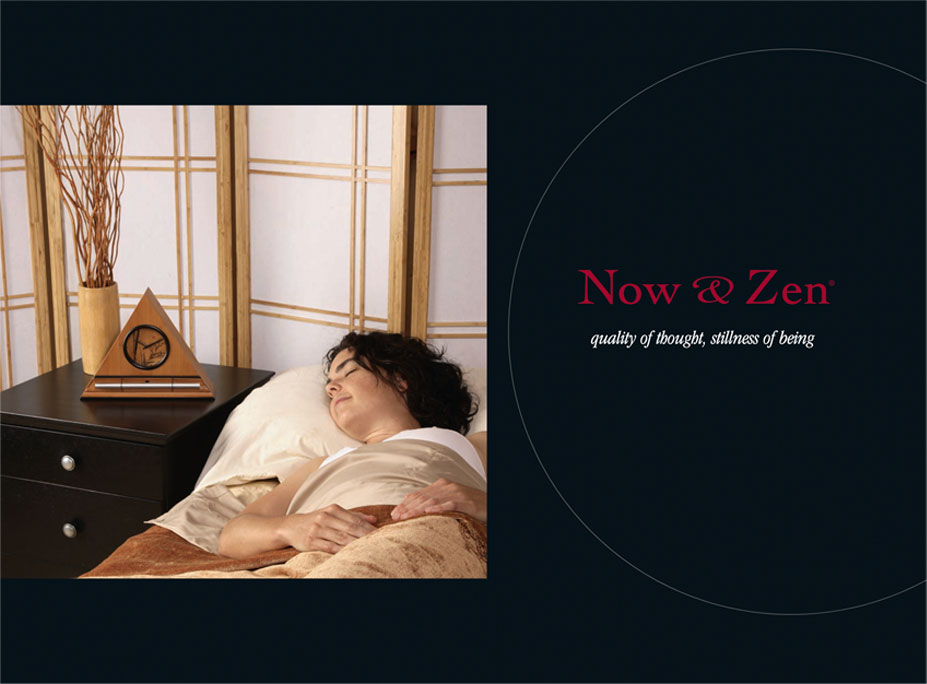
Choose a peaceful wake up - The Z E N Alarm Clock - the only clock with natural sounds

Choose a peaceful wake up - The Z E N Alarm Clock - the only clock with natural sounds

The body actually has a physiological response to its environment, experts say. But since people aren’t usually aware of this response, linking work space in the bedroom with sleeping problems may be difficult.

“Any activity that is associated with being awake in the bedroom, like work, can be a problem,” explains Dr. Jerrold Kram of the California Center for Sleep Disorders in Oakland.

“It is an even more extreme problem for people who work in bed — answering the phone, reading important papers, studying and taking notes,” says Kram. “Their body becomes ingrained with being awake in bed, and any awake activity — defined as an activity that requires alertness — is not what you want to perpetuate in an environment intended for sleep.”

If space constraints preclude emptying the bedroom of work-related paraphernalia, consider separating work and sleep spaces in the room. A freestanding partition or decorative screen can enclose the bed for a cozy sleep environment. Adding a sleeping loft above the work space for the bed can also distinguish working and sleeping spaces.

QUIET, PLEASE

Environmental noise is a huge issue, especially for people who must sleep during the day because of work schedules. But noise can even affect the quality of sleep for those who sleep at night — especially if they live on a busy street, near an airport or train station, or with a snoring bedmate.

“When I started in this business of sleep disorders, it didn’t dawn on me that people can get accustomed to noise, and not recognize that it can still be disruptive or problematic,” says Kram. “Someone will come in and say, ‘I sleep badly; I wake up a lot,’ but have no idea what woke them.”

Kram relates studies in which a bell was rung every two or three minutes near sleeping patients.

“When the patient was asked in the morning if they remembered the bell ringing, they responded, `What? Are you out of your mind? There was no bell!’

“But when we examined their brain waves, they had had an awakening or arousal for a few seconds every three minutes. These arousals cause fragmented sleep and result in sleep deprivation.”

Fragmented sleep can result in an achy feeling, lack of concentration and mental fatigue the next day.

White noise neutralizes jarring, intermittent sounds. Installing a fan or air conditioner in the room not only provides white noise but also controls the temperature for comfortable sleep.

Another option is to purchase a white noise generator that emits a broad spectrum of sound at a constant volume. Some generators replicate the pleasing sounds of an ocean or steady rain and mask unwanted noise.

“Eventually, you will habituate to this white noise, and disruptive environmental noise will become less of a factor,” Reichert explains.

Sleep specialists also recommend aids such as “industrial strength” earplugs fitted by a doctor, or earphones attached to white noise generators, especially if a snoring bedmate is causing the noise pollution.

To clients who are remodeling their bedrooms, Kram often recommends adding extra insulation to rooms and changing to soundproof windows. And it may be necessary to cover hardwood floors and replace light and airy window shades with heavy, noise-absorbing draperies.

LIGHTS OUT

Light filtering through window shades may provide a warm glow to a room, but artificial or natural light exposure may also rob people of sleep. Blackout shades are a must for those who sleep during the day. But those bothered by errant light at night also should consider them.

“Light is a powerful cue that resets the body’s circadian rhythm and tells it to wake up,” explains Audrey Chang of the Better Sleep Council of Washington, D.C. The council reports findings from a recent study that show exposure to even moderate levels of light at night — such as artificial light — can throw off the body’s internal clock and cause a state similar to jet lag.

“For many people, you can’t even have a streetlight down your block filtering in,” says Darlene Sanders, former designer of sleep labs and now a representative for Roc-lon TLC, a manufacturer of blackout draperies based in Baltimore, Md.

Blackout draperies have come a long way from the vinyl-coated drapery liners of years past. All-in- one fabrics produced with a heat transfer process on polyester-and- cotton-base cloth feature patterns resembling fabrics from silk moire to denim. Hidden magnetic closures in the seams provide total light control.

COLOR CONSCIOUS

Bright reds, hot oranges and intense yellows are probably not the best colors for a sleep environment, says interior designer Paula McChesney of San Mateo. But the conventional bedroom colors of muted blues and soft greens will not work for everyone, either.

“There is a distinct part of our brain that relates to color memory, much like certain smells help us recall something from the past,” explains McChesney. The designer, who has had careers in both health care and interior design, has focused much of her work on exploring how color affects people.

“If Grandma’s home was in shades of blue and you were unhappy there, chances are blues won’t relax you now,” she says.

Hue and intensity are also important.

“Some people would find a midnight blue cozy and good to sleep in, but for me it would be claustrophobic. I would like a turquoise blue that reminds me of the Caribbean,” McChesney says.

For a relaxing environment, she says, avoid high contrast, such black and white, and patterns such as bold stripes or diagonals that excite the eye.

The best bedroom design for sleep ultimately comes down to what the National Sleep Foundation calls the three basics: cool, dark and quiet.

One of the ultimate Zen like experiences is waking-up from a great slumber refreshed and energized. Your mind and body are harmoniously one, both alert and focused. Having a refreshed mind and body are two keys to a natural and Zen lifestyle. Waking up in the morning should not be a loud and abrupt awakening, but rather it should be a peaceful positive experience.  The right natural alarm clock can transition your deep and tranquil sleep into a serene start to consciousness. Imagine a long-resonating Tibetan bell-like chime waking you up to a beautiful morning experience.

The right alarm clock can be the most beneficial investment for you. With our Now & Zen natural alarm clock you are awakened more gradually and thus more naturally. Now & Zen is focused on creating a naturalistic lifestyle, and our clocks are an example of our philosophy.

adapted from sfgate.com by Gail Benchener

Natural Sounding Alarm Clocks -- Vibrating Chime Bar Wakes You Gently

Natural Sounding Alarm Clocks -- Vibrating Chime Bar Wakes You Gently

Now & Zen – The Most Natural Awakening – Slow & Gentle

The Z E N Alarm Clock Store

1638 Pearl Street

Boulder, CO  80302

(800) 779-6383

orders@now-zen.com

Posted in Bamboo Chime Clocks, Natural Awakening, Sleep Habits, sleep


How to Choose an Alarm Clock – Remember Sleep Improves Your Memory

Sunday, April 15th, 2012
How to choose a great alarm clock with natural sounds - Visit Now & Zen, Inc. - Boulder, CO

How to choose a great alarm clock with natural sounds - Visit Now & Zen, Inc. - Boulder, CO

The next time you think about studying all night with your face in a book, think about this: Your brain will work better if you sleep on that book instead.

Shut-eye may be a good performance-boosting strategy, according to a new study presented at the Society for Neuroscience Conference in Atlanta.

Scientists from Harvard University studied nearly 100 college students to find out whether sleep can improve memory.

They divided the students into two groups and told each student to memorize several lists of related words — such as bed, sheet, and pillow or sill, glass, and pane — as they were read aloud.

The first group tried to memorize the lists at 9 a.m. while the second group tried to memorize the lists at 9 p.m.

The memory test came 12 hours after the students had first heard the words.

So, daytime learners were tested at 9 p.m. while night learners were tested at 9 a.m.

But the students who first learned the words during the evening got a good night’s rest before facing their memory test the next morning.

Each group was asked to write down all the words that they could remember. Researchers found that the students who studied the lists at 9 p.m. and got some sleep remembered more words than the students who were tested after staying awake throughout the day.

The Phenomenon of Remembering Incorrectly

However, the students who got some sleep also recalled some words that were not on the lists.

From a list of words including bed, sheet and pillow, a student may incorrectly remember the word “sleep” or form a false memory for the word “window” in a list including sill, glass and pane.

The students were remembering words that were associated with the ones that they had actually heard.

Scientists call this phenomenon of incorrectly remembering something that didn’t happen a “false memory.”

False memories are not all that unusual. It’s similar to a feeling you have when you think you’re sure that something happened — until someone proves you wrong.

Then you realize that your false memory was just an idea very closely related to something that happened in reality.

Sleep Plays a Role in False Memories

The students who snoozed before testing had more of these false memories than their friends who did not sleep.

This is the first time scientists have seen that sleep plays a role in false memories — and researchers are excited about the discovery.

The finding suggests that the brain is hardly asleep when the rest of the body is.

“Sleep is not a passive state where we lay around and lose productivity, but an active process during which the brain is integrating information,” said Dr. Christoph Nissen, sleep researcher and postdoctoral fellow at the Western Psychiatric Institute in Pittsburgh.

According to this study, the brain is engaged in a sort of wordplay while the body is asleep.

sleep improve ones memory

sleep improve ones memory

This finding suggests that a learning process occurs during sleep that has a lot to do with language and what words mean, says Dr. Lawrence Epstein, past president of the American Academy of Sleep Medicine, and medical director of Sleep Health Centers in Boston.

Our brain forms links between our memories for these words to help us store information in a way that is meaningful to us.

During sleep, “our brain is writing a summary,” said Dr. Robert Stickgold, study author and associate professor of psychiatry at Harvard Medical School and Beth Israel Deaconess Medical Center.

When the brain awakes, it may recall words from this summary even though those words weren’t part of the original exercise.

Forget the All-Nighters

Sleep may do interesting things to our memories, but not sleeping can wreak havoc on the brain and on the body.

Experts say that getting enough sleep is vital to our overall health.

It plays a role in immune function, emotional regulation, and other processes like the ability to concentrate.

There’s no substitute for serious studying, but a good night’s sleep may prove to be more helpful than scientists previously thought.

“People who study and then sleep recall things better than people who stay up all night studying,” Epstein said.

Boulder, Colorado—an innovative company has taken one of life’s most unpleasant experiences (being startled awake by your alarm clock early Monday morning), and transformed it into something to actually look forward to. “The Zen Alarm Clock,” uses soothing acoustic chimes that awaken users gently and gradually, making waking up a real pleasure.

Get help choosing a different alarm clock -- Visit our store - Now & Zen, Inc. - Boulder, CO

Get help choosing a different alarm clock -- Visit our store - Now & Zen, Inc. - Boulder, CO

Rather than an artificial recorded sound played through a speaker, the Zen Clock features an alloy chime bar similar to a wind chime.  When the clock’s alarm is triggered, its chime produces a long-resonating, beautiful acoustic tone reminiscent of a temple gong.  Then, as the ring tone gradually fades away, the clock remains silent until it automatically strikes again three minutes later.  The frequency of the chime strikes gradually increase over ten-minutes, eventually striking every five seconds, so they are guaranteed to wake up even the heaviest sleeper.  This gentle, ten-minute “progressive awakening” leaves users feeling less groggy, and even helps with dream recall.

adapted from abcnews.go.com by LISA PHILIPOSE

Choose the right alarm clocks for a refreshed mood in the morning - Visit Now & Zen, Inc - Boulder, CO

Choose the right alarm clocks for a refreshed mood in the morning - Visit Now & Zen, Inc - Boulder, CO

Now & Zen – The Alternative Alarm Clock Shop

1638 Pearl Street

Boulder, CO  80302

(800) 779-6383

Posted in Bamboo Chime Clocks, Natural Awakening, Now & Zen Alarm Clocks, Sleep Habits, Zen Alarm Clock, sleep


Unusual Gentle Clock

Sunday, April 15th, 2012
Unusual Gentle Clock Shop - Now & Zen, Inc. - Boulder, CO

Unusual Gentle Clock Shop - Now & Zen, Inc. - Boulder, CO

Just Say No to a Snooze Button

Most modern alarm clocks include a “snooze button” mechanism which allows the user to go back to sleep for a brief period after the initial alarm.
While this may make it easier for some people to “face the day,” here at Now & Zen we feel the whole concept of a snooze button is “all wrong.”
People want snooze buttons because they want to awaken gradually.  And this is only natural because just as our bodies fall asleep gradually, our bodies also want to wake up gradually. However, with a regular, snooze button-equipped alarm clock the user is initially “startled awake” by the alarm, and then continually startled awake with each press of the snooze button.  This is not the way to treat your body because it creates a kind of merry-go-round of multiple “rude awakenings.”
Sleep Sounder - Choose the Most Unusual Clock with Acoustic Chimes

Sleep Sounder - Choose the Most Unusual Clock with Acoustic Chimes

As an alternative we recommend using our Zen Alarm Clock, which wakes users gradually with a built-in 10 minute progression of gradually increasing acoustic chimes. It really is a better way to get up in the morning.
Zen Alarm Clocks make waking up a beautiful experience. And once you experience the Zen Clock’s gradual 10 minute chime progression, you will never want to wake up any other way again.
Gentle Clocks and Timers - Boulder, CO

Gentle Clocks and Timers - Boulder, CO

Now & Zen – The Home of the Most Unusual Gentle Clock

The Zen Alarm Clock Headquarter Store

1638 Pearl Street

Boulder, CO  80302

(800) 779-6383

orders@now-zen.com

Posted in Bamboo Chime Clocks, Natural Awakening, Now & Zen Alarm Clocks, Zen Alarm Clock, sleep


Set a Gentle Wake Up Alarm Clock with Chime to Feel Refreshed in the Morning

Friday, April 13th, 2012
Choose a Gentle Wake Up in the Morning -- The Z E N Alarm Clock

Choose a Gentle Wake Up in the Morning -- The Z E N Alarm Clock

A Sleep in America Poll released by the National Sleep Foundation in 2008 reported that 65 percent of Americans have trouble falling asleep, wake during the night or wake feeling unrefreshed at least a few times each week. (On average, individuals need at least eight hours of sleep, but a recent finding that genetic makeup may play a role in how much sleep each person needs was published by UCSF researchers last week.)

Boulder, Colorado—an innovative company has taken one of life’s most unpleasant experiences (being startled awake by your alarm clock early Monday morning), and transformed it into something to actually look forward to. “The Zen Alarm Clock,” uses soothing acoustic chimes that awaken users gently and gradually, making waking up a real pleasure.

Rather than an artificial recorded sound played through a speaker, the Zen Clock features an alloy chime bar similar to a wind chime.  When the clock’s alarm is triggered, its chime produces a long-resonating, beautiful acoustic tone reminiscent of a temple gong.  Then, as the ring tone gradually fades away, the clock remains silent until it automatically strikes again three minutes later.  The frequency of the chime strikes gradually increase over ten-minutes, eventually striking every five seconds, so they are guaranteed to wake up even the heaviest sleeper.  This gentle, ten-minute “progressive awakening” leaves users feeling less groggy, and even helps with dream recall.

adapted from SFgate.com by Carolyne Zinko

Gentle, Soothing, and Elegant Sounding Alarm Clocks -- No Beeping Electronics

Gentle, Soothing, and Elegant Sounding Alarm Clocks -- No Beeping Electronics


Now & Zen – The Zen Alarm Clock Shop

1638 Pearl Street

Boulder, CO  80302

(800) 779-6383

orders@now-zen.com

Posted in Bamboo Chime Clocks, Natural Awakening, Sleep Habits, Well-being, sleep, wake up alarm clock


Sleep Better Naturally with Relaxation Exercises

Friday, April 13th, 2012
sleep better naturally

sleep better naturally

Making a few changes in your sleep regimen may ease your insomnia more effectively than popping a pill, according to a recent study from the Journal of the American Medical Association. Of the study’s 46 insomniac participants, those who learned new sleep-inducing strategies (relaxation exercises; creating a more sleep-friendly bedroom) spent 52 percent less time tossing and turning after six weeks. Those who took the sleeping pill Imovane cut back on their wake time by only 4 percent. To shake off chronic insomnia, author Borge Sivertsen, Psy.D., suggests following a two-week sleep restriction plan: Wake up around 6 a.m. every day, avoid daytime naps, and wait as long as you can before hitting the sack each night.

Body+Soul, November/December 2006

sleep better naturally, wake up with a calming zen alarm clock

sleep better naturally, wake up with a calming zen alarm clock

Now & Zen

1638 Pearl St.

Boulder, CO  80302

(800) 779-6383

Posted in Insomnia, Natural Awakening


Sleep is for the Thrifty – Choose the Most Calming Alarm Clock

Thursday, April 12th, 2012
Sounder Slumber with Natural Chime Alarm Clocks

Sounder Slumber with Natural Chime Alarm Clocks

There’s a growing body of evidence linking sleep deprivation to poor physical health. Now there’s a study that suggests sleeplessness can hurt your fiscal fitness too.

Researchers at Duke University have found out that sleep deprivation boosts the part of your brain that tends toward optimism,; it also leads the part of your brain that processes negative outcomes to pipe down. As the news releases noted:

Sleep-deprived individuals in the study tended to make choices that emphasized monetary gain, and were less likely to make choices that reduced loss.

Although the study examined the way people in casinos behaved, it’s worth pondering how sleeplessness could be affecting your everyday financial decisions.

It’s one thing to be a sleep-deprived new parent and pony up for the Cloud b Sleep Sheepbecause you are desperate for the baby to sleep anywhere other than your arms ( … um. Not that I speak from personal experience. Or am bitter it didn’t work).

But is it possible that the chronically sleep deprived might be more prone to false thrift because they’re focusing more on the perceived financial benefits than on the realistic and likely drawbacks? Or perhaps their fiscal discipline is napping while they’re still up. In the bookNurtureShock: New Thinking About Children, authors Po Bronson and Ashley Merryman write:

Sleep loss debilitates the body’s ability to extract glucose from the bloodstream. Without this stream of basic energy, one part of the brain suffers more than the rest — the prefrontal cortex, which is responsible for what’s called “Executive function.” Among those executive functions are the orchestration of thoughts to fulfill a goal, prediction of outcomes, and perceiving consequences of actions.

Working toward goals, thinking through consequences — those sound like two of the governing mechanisms that help people manage their spending and saving.

Perhaps somewhere Benjamin Franklin is smiling. After all he is the one who said, “Early to bed and early to rise, makes a man healthy, wealthy and wise.”

One of the ultimate Zen like experiences is waking-up from a great slumber refreshed and energized.

One of the ultimate Zen like experiences is waking-up from a great slumber refreshed and energized.

The right alarm clock can be the most beneficial investment for you. With our Now & Zen natural alarm clock you are awakened more gradually and thus more naturally. Now & Zen is focused on creating a naturalistic lifestyle, and our clocks are an example of our philosophy.

One of the ultimate Zen like experiences is waking-up from a great slumber refreshed and energized. Your mind and body are harmoniously one, both alert and focused. Having a refreshed mind and body are two keys to a natural and Zen lifestyle. Waking up in the morning should not be a loud and abrupt awakening, but rather it should be a peaceful positive experience.  The right natural alarm clock can transition your deep and tranquil sleep into a serene start to consciousness. Imagine a long-resonating Tibetan bell-like chime waking you up to a beautiful morning experience.

adapted from sfgate.com by Lisa Schmeiser

Now & Zen – The Chime Alarm Clock Store – Downtown Boulder

1638 Pearl Street

Boulder, CO  80302

(800) 779-6383

Orders@now-zen.com

The luxurious awakening provided by the Zen Alarm Clock is part of the growing preference for things natural—natural foods, natural fibers, and now, natural acoustic sounds.

The luxurious awakening provided by the Zen Alarm Clock is part of the growing preference for things natural—natural foods, natural fibers, and now, natural acoustic sounds.

Posted in Bamboo Chime Clocks, Chime Alarm Clocks, Natural Awakening, Sleep Habits, sleep


Gong Clocks & Timers with Chimes for Meditation

Thursday, April 12th, 2012
Cherry Blossoms

Cherry Blossoms

Beyond the psychological inquiry into dreams or the self-improvement techniques of affirmations lies the ancient and sacred practice of meditation.  Some form of meditation is practiced in every major world religion.  Yogis, Christian mystics, Zen Buddhists, Quakers, practitioners of the Kabbalah, and Secular Humanists, all experience the benefits of meditation.
A Moment of Stillness in Nature

A Moment of Stillness in Nature

The Zen Timepiece is an exquisite “accoutrement to meditation.”  It can be used in a variety of ways to aid your practice and encourage you to “make time” to meditate.  The first and most basic use of the Zen Timepiece in your meditation practice is as a signal of the end of your allotted meditation time.

If you want to meditate for twenty minutes, simply set our Chime countdown timer for twenty minutes and begin your meditation.  When the countdown timer reaches zero and the bowl/gong is struck, you can choose to end there or continue your meditation for about three and a half minutes until the next bowl strike, or even longer.  Many meditators find that a “three and a half minute warning” is a perfect interval in which to gradually conclude their longer meditations.  The first strike signals the final phase of the meditation and the second strike its conclusion.  The beauty of the brass bowl/gong is that it complements rather than disturbs the meditative state while acting as an effective timer.  No matter how you use it, the sonic clarity of the brass bowl provides an appropriate conclusion to your stillness.

Now & Zen Headquarter Store, Boulder, CO

The bowl that comes with the Zen Timepiece is made from the following five metals: copper, zinc, lead, iron, and tin.  It has been formed using the same forging techniques that have been used in Asia for two thousand years.  Unlike hand-hammered Himalayan-style bowls, our Zen Timepiece’s rin gong bowl is made using methods which first appeared in Japan in the first century.  Following these traditions, your bowl’s long-resonating tone has been carefully selected to bring beauty and harmony to your environment.

Clocks and Timers with Gentle, Soothing Chimes

Clocks and Timers with Gentle, Soothing Chimes

Now & Zen’s Chime Alarm Clock Shop

Home of The Zen Alarm Clock & Zen Timepiece with Singing Bowl

1638 Pearl Street

Boulder, CO  80302
(800) 779-6383

Posted in Japanese Inspired Zen Clocks, Meditation Timers, Meditation Tools, Natural Awakening, Now & Zen Alarm Clocks, Progressive Awakening, Yoga Timers by Now & Zen, Zen Timepiece by Now & Zen, Zen Timers


A Soothing Alarm Clock Can Make a Difference – Americans Get Less Sleep Than They Think

Monday, April 9th, 2012

Choose a Soothing Alarm Clock - Kitagawa Utamaro, Komuraski of the Tamaya, House After a Bath, 1795

Choose a Soothing Alarm Clock - Kitagawa Utamaro, Komuraski of the Tamaya, House After a Bath, 1795

Getting enough sleep? Probably not.

A new study in the Journal of Clinical Sleep Medicine finds that people tend to overestimate — not underestimate — the amount of sleep that they get.

The finding could add weight to the idea that Americans already skimp too much on sleep. And since many of us may be sleeping even less than we think, our lack of shut-eye may go largely unnoticed.

“People are losing sleep,” says lead author Graciela Silva, assistant professor, college of nursing and health care innovation, at Arizona State University. “Although seven and a half to eight hours are recommended, people sleep, on average, six hours each night,” she said.

But the surprise lay in the fact that most of the time, people were unaware that they were getting so little sleep.

“What is innovative and unexpected is that the older adults overestimated their sleep, rather than underestimated it,” said Dr. Phyllis Zee, director of the sleep disorders center at Northwestern University in Chicago, Ill.

“As for the issue of sleep in our society, it looks like we are sleeping even less than we thought — which is often insufficient for mental and physical health to begin with,” said James Olcese, associate professor of the department of biomedical sciences at Florida State University College of Medicine in Tallahassee, Fla.

The findings of the study are further driven home by its sheer magnitude. A total of 2,113 participants, aged 40 years or older, participated in the study. Rather than taking a sample from a patient population known to have sleep problems or illnesses, this study examined a population largely representative of the general population.

American don't get enough sleep -- a soothing alarm clock with gentle chimes can make all the difference

American don't get enough sleep -- a soothing alarm clock with gentle chimes can make all the difference

And participants did not even have to leave their own bed. Unlike previous studies that required participants to be present in the sleep lab to undergo tests, in this study, researchers, instead, followed subjects into their own homes.

There, the technicians hooked participants up to a polysonogram, a sleep test that measures brain waves to determine the amount of sleep they are actually getting.

The Morning After

The next morning, participants were asked to report how much sleep they felt they routinely enjoyed, as well as how many hours of sleep they believed they had the previous night.

What researchers found was that participants consistently overestimated the amount of sleep they actually got. They estimated that they typically slept seven hours, but the polysonogram recorded a modest six.

Olcese said the results suggest that researchers may be better off conducting objective tests like polysonograms, rather than patient questionnaires, when it comes to figuring out exactly how much sleep a person is getting.

“Simply put, this study reminds us that what people say that they are doing is not always exactly correct,” he said. “Personal subjectivity usually biases the results of questionnaires somewhat, so don’t believe everything you hear, unless there is objective confirmation.

“These findings draw attention to the need for objective measures of sleep parameters, rather than using subjective evaluations.”

However, the findings were not shocking to everyone.

“This really does not surprise me,” said Dr. Nancy Collop, medical director of the Johns Hopkins Hospital Sleep Disorders Center, in Baltimore. In her sleep studies, she has found that patients routinely misperceive how much they sleep, often stating “I didn’t sleep at all.”

Not getting enough sleep may be so pervasive within our society that many may not view it as a big problem.

However, missing out on sleep is more detrimental than many may realize.

“As we have progressed, people are losing sleep time,” explained Silva, who is concerned that a sleep deficiency may affect daily functioning. This, she said, underscores the implications of her research for the thousands of physicians who routinely ask patients about their sleep habits.

“Physicians should take into account that people overestimate their sleep time,” Silva said.

Zee agrees, and added that doctors often rely on subjective reports. “So, doctors need to be cognizant that older adults may be overestimating, and if they are actually getting less sleep, [it] may be associated with increased risk for cardiovascular, metabolic conditions that have been associated with short sleep duration.”

The Alternative Soothing Alarm Clock - Choose from Chime Clocks or Gong Alarm Clocks - Boulder, CO

The Alternative Soothing Alarm Clock - Choose from Chime Clocks or Gong Alarm Clocks - Boulder, CO

More ZZZZs, Anyone?

Fortunately, there are steps that those wishing to maximize their sleep, or improve its quality, may take. These include refraining from heavy meals, hot baths, or vigorous exercise close to bedtime.

Caffeine lovers should avoid caffeinated beverages late in the day, and technology connoisseurs should relocate all of their noise-making gadgets — including computers and televisions — out of the bedroom.

If all else fails, and you are not rested after sleeping, Collop suggests actively trying to get more sleep.

Wake up refreshed, love your alarm clock, transform your mornings with The Zen Alarm Clock’s progressive awakening with gentle chimes.

Our Zen Timepiece’s acoustic 6-inch brass bowl-gong clock is the world’s ultimate soothing alarm clock.

Singing Bowl Alarm Clock - The Soothing Alarm Clock for a Peaceful Morning

Singing Bowl Alarm Clock - The Soothing Alarm Clock for a Peaceful Morning

It fills your environment with beautifully complex tones whenever it strikes. In the morning, its exquisite sounds summon your consciousness into awakening with a series of subtle gongs that provide an elegant beginning to your day. Once you experience the Zen Timepiece’s progressive awakening, you’ll never want to wake up any other way. It also serves as the perfect meditation timer. Available in 5 wood styles, including bamboo (shown).

adapted from abcnews.go.com by By STEPHANIE TODD, M.D.

Now & Zen – The Zen Alarm Clock Shop

1638 Pearl Street

Boulder, CO  80302

(800) 779-6383

orders@now-zen.com

The best soothing alarm clock -- alternative clocks with gongs and chimes

The best soothing alarm clock -- alternative clocks with gongs and chimes

Posted in Insomnia, Natural Awakening, Sleep Habits, sleep, wake up alarm clock


The Only Alternative Alarm Clock – Sleep Experts Call for Siestas

Monday, April 9th, 2012
Choose an Alternative Alarm Clock - Ukiyo-e Toshi Yoshida Sanbu Zaki Cherry Blossoms

Choose an Alternative Alarm Clock - Ukiyo-e Toshi Yoshida Sanbu Zaki Cherry Blossoms

Imagine a long leisurely lunch with a nap instead of a cold sandwich in front of your computer.

“It makes absolute sense,” said Dr. James Parish, medical director for the Sleep Disorder Center of the Mayo Clinic in Scottsdale, Ariz. “Sleep research has recently and repeatedly shown us what we have known for a long time and that is that sleep deprivation is an epidemic in this country.”

A new global Internet survey by the U.K.-based Sleep Council, a non-profit organization that advocates more sleep, calls for implementation of the siesta. The survey, released Sunday, asked people when they felt most alert and productive. Of 12,000 respondents, mostly from the United States and Europe, 41 percent said in the morning, while 38 percent said they hit felt most alert in the evening.

“The implication is that the majority are not fully alert in the middle of the day — the traditional time for a siesta in hot countries,” sleep expert Chris Idzikowski, a professor at Surrey University who conducted the two-year sleep study, told Reuters.

A Sleep Deprived Nation

Sleep deprivation usually manifests itself in feeling especially drained in the afternoon, say sleep experts. It’s the time of day when serotonin and dopamine levels, which regulate mood, sleep and emotion, naturally dip. And if you are already sleepy, this dip is even more dramatic.

“This feeling of drowsiness is sometimes associated with the mid-day meal,” said Dr. Michael Smolensky, author of The Body Clock Guide to Better Health and professor of environmental physiology at the University of Texas School of Public Health in Houston. “But it really has a lot more to do with natural changes in the brain at this time in the afternoon. The body clock naturally governs itself and it includes this natural dip in the afternoon.”

Many European countries and others with hot climates have long implemented an afternoon down time, or siesta, when stores close, business shut down and residents go home for a nap, or take a long rest at a cafe or restaurant.

Experts say that with a rest during the afternoon hours when the serotoninergic system in a person’s brain slows, workers might perform better at their jobs, and even be more safe.

“What we see in children and adults with this loss of alertness is also a loss of hand/eye coordination in the afternoon,” Smolensky said. “Frankly, I sometimes take a short power nap in the afternoon.” Another way to feel refreshed in the afternoon, if you are not one who naps, is to take a rest, walk around the block, sit on a park bench, Smolensky says.

Less Sleep, More Bragging

“[Americans] like to brag about how little sleep they need, almost as if they are bragging about how many cars we own,” said Dr. Phyllis Zee, director of Chicago’s Northwestern Memorial Hospital’s Sleep Disorder Center. “We say we can get away with something like six hours of sleep. But, that’s not enough sleep. Most people need eight hours of sleep. This is why we feel tired in the afternoon and run down.”

Alternative Alarm Clock Store - Boulder, CO

Alternative Alarm Clock Store - Boulder, CO

The Council’s study suggests that workers allowed to follow their natural sleeping habits and rhythms would benefit employers by expanding working hours and production.

“It’s a very cultural thing for Americans to push themselves during the day,” said Zee. “With an economy that moves and changes quickly and rapidly, the harder you work and the longer hours you put in, you think you are more productive. But it reaches a point when you are sleep deprived, then you are just going to make mistakes and that productivity you perceive won’t matter.”

Waking up in the morning should be as pleasant as falling asleep at night. The Zen Alarm Clock’s gradual, gentle awakening is transformative.

One of the most alternative alarm clocks is called The Zen Alarm Clock.  The Zen Clock’s long-resonating Tibetan bell-like chime makes waking up a beautiful experience – its progressive chimes begin your day with grace. When the clock’s alarm is triggered, the acoustic chime bar is struck just once … 3-1/2 minutes later it strikes again … chime strikes become more frequent over 10 minutes … eventually striking every 5 seconds until shut off. As they become more frequent, the gentle chimes will always wake you up – your body really doesn’t need to be awakened harshly, with a Zen Clock you’re awakened more gradually and thus more naturally.  Unlike artificial recorded sounds coming out of a tiny speaker in a plastic box, natural acoustic sounds transform your bedroom or office environment.

adapted from abcnews.go by By Rose Palazzolo

Choose an Alternative Alarm Clocks -- The Zen Alarm Clock Store - Boulder, CO

Choose an Alternative Alarm Clocks -- The Zen Alarm Clock Store - Boulder, CO

The Alternative Alarm Clock Store - Alarm Clocks with Gongs and Chimes

The Alternative Alarm Clock Store - Alarm Clocks with Gongs and Chimes

Now & Zen – The Alternative Alarm Clock Store

1638 Pearl Street

Boulder, CO  80302

(800 779-6383

Posted in Bamboo Chime Clocks, Natural Awakening, Now & Zen Alarm Clocks, Sleep Habits, sleep


Morning Wake-Up: Set Your Zen Clock to Repeat

Monday, April 9th, 2012
Wake-Up

Wake-Up

It’s often hard to find the inspiration to get out of your nice, comfortable bed when you’re still so tired. But according to Kundalini yoga, a built-in supply of energy lies dormant at the root of the spine, like a bulb that rests underground, waiting for a cue to bloom. By accessing this vitality, you’ll have the charge you need to fire up your day — without having to resort to a double latte.

“When you awaken your Kundalini energy and get it flowing up your spine,” says Maya Fiennes, a London yoga teacher and star of the DVD “Kundalini Yoga to Detox and Destress,” “you become alert and uplifted instead of sluggish and stressed.” We worked with Fiennes to develop this series of simple moves that stretch and strengthen the spine, increase vitality, reduce tension, release impurities, and improve focus — everything you need to face what lies ahead.

Camel Ride Targets
The lower spine.

What It Does
Releases lower-back tension, opens the hips, stimulates the digestive and immune systems, and promotes mental focus. “When you flex the spine,” says Fiennes, “you flex the mind.”

How to Do It
Sit cross-legged on the floor with your hands resting on your ankles. Bring your ribs and chest forward, gently arching your back, as you inhale. Then move the rib cage backward and round your lower spine as you exhale. Keep your neck relaxed and your chin parallel to the ground. Continue doing this exercise in unison with your breath for about two minutes and repeat.  Set your Zen Alarm Clock to repeat every 2 minutes so that you can concentrate on streching.

Adapted from Body + Soul Magazine, March 2008 by Kate Hanley

Natural Wake-Up Clock with Chime for Progressive Awakening

Natural Wake-Up Clock with Chime for Progressive Awakening

Now & Zen’s Clock and Meditation Timer Store

1638 Pearl Street

Boulder, CO  80302

(800) 779-6383

Posted in Bamboo Chime Clocks, Chime Alarm Clocks, Natural Awakening, Now & Zen Alarm Clocks, Sleep Habits, Well-being, sleep


« Previous Page« Previous Entries Next Entries »Next Page »


Back
Share |
Zen Alarm Clock

Zen Alarm Clock
Digital Zen Alarm Clock

Digital Zen Alarm Clock
Zen Timepiece

Zen Timepiece
Zen Doorbell

Zen Doorbell
Tibetan Phone Bell & Timer

Tibetan Phone Bell
Integral Consciousness and the Future of Evolution by Steve McIntosh

Founder's Book & DVDs
Home Media Customer Reviews About Now & Zen Money-Back Guarantee Shipping Costs Blog

Contact Us   |   Wholesale Inquiries   |   Contact Customer Service   |   Catalog Request   |   Gift Cards   |   Product Videos


Copyright © 2012 Now & Zen, Inc., Boulder Colorado, USA all rights reserved. Sitemap | Privacy

ABOUT TRUST ONLINE