|
Secure Site
|
 |
Archive for the 'Well-being' Category
Friday, January 20th, 2012
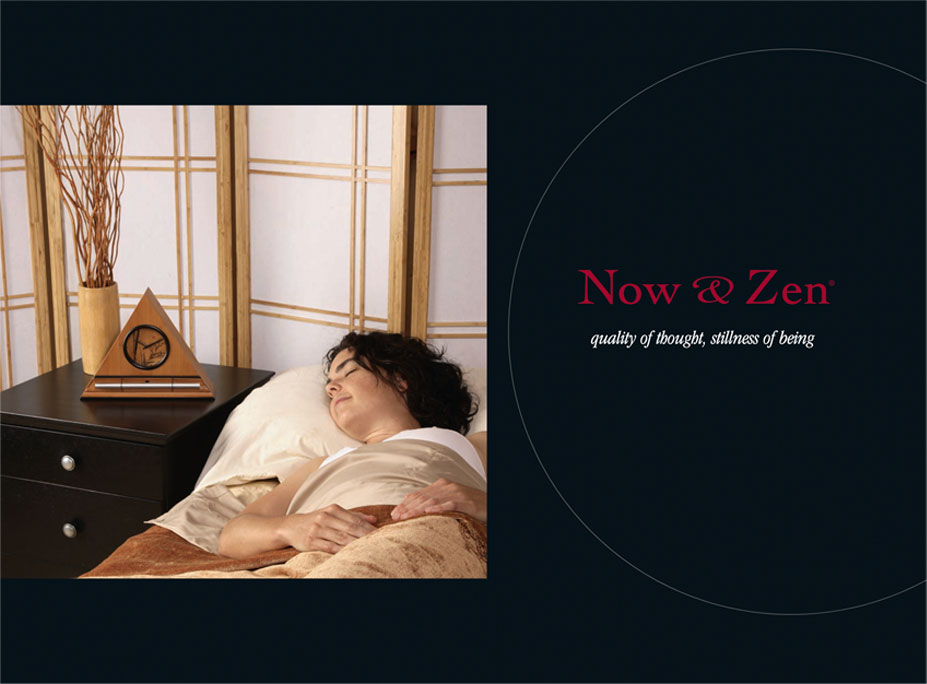
 zen alarm clock
As the temperature drops, your superficial venous circulation slows down, meaning your body has to work harder to get blood from your feet back to your heart. To help your venous circulatory system and keep varicose veins at bay, Dr. Luis Navarro of the Vein Treatment Center in New York City suggests getting your feet 6 to 12 inches above your heart at least once a day. Tonight, try a yoga pose that raises your legs against a wall, or lie on the couch with your feet resting on a stack of pillows. Cup of hot tea (or hot toddy) optional.
adapted from Wholeliving.com, Oct. 2011
Posted in Well-being, Zen Alarm Clock
Wednesday, June 1st, 2011
Whether it’s yoga to reduce muscle tension, breathing to slow the heart rate, or an herbal massage to calm a racing mind, a simple routine can be the most effective and safest road to a better night’s sleep. There is growing evidence that small behavioral changes can make a big difference in getting some good shuteye. A 2006 study published in the Journal of the American Medical Association showed that participants who made modifications like reducing stimuli in the bedroom and learning relaxation techniques improved their sleep more than those who took drugs.
adapted from Yoga Journal
To find out which rituals will work best for you, it helps to understand insomnia from an Ayurvedic perspective. Yoga’s sister science and India’s oldest known system of medicine, Ayurveda is based on the idea that the life force that exists in all of us manifests as three different energies, or doshas, known as vata, pitta, and kapha. Though everyone has some of each dosha, most people tend to have an abundance of one or two.
Vata, ruled by air and ether, governs movement in the body. Pitta, ruled by fire, governs digestion and the metabolism. And kapha, ruled by earth and water, governs your physical structure and fluid balance. Ayurveda categorizes insomnia as a vata imbalance, because vata is controlled by air—and air controls the nervous system. Calming yoga and Ayurvedic rituals reduce vata in the body.
adapted from Yoga Journal, by Kelly McGonigal
 Meditation Timers and Alarm Clocks, tools for relaxation
Now & Zen
1638 Pearl Street
Boulder, CO 80302
(800) 779-6383
Posted in Well-being, Yoga Timer, yoga
Saturday, May 28th, 2011
 meditation
A long-term benefit of meditation is that you are able to be in line with yourself and the world around you. You are way more alert and in a more peaceful state of being. Not to mention that you will have lower blood pressure, reduced risk of cardiovascular disease by increasing circulation, reduced insulin resistance, reduced mortality rates, and reduced heart-rate variability. In some ways, it’s the perfect antidote to the amount of stress we have in our daily lives.
adapted from Natural Solutions Magazine, by Jill Englund, April 2011
 Timers with chime, perfect for meditating day or night...
Now & Zen
1638 Pearl Street
Boulder, CO 80302
(800) 779-6383
Posted in Meditation Timers, Meditation Tools, Well-being, mindfulness practice
Friday, May 27th, 2011
 Meditation
After meditating for a while, you start to respond instead of reacting to life. The term “react” is a monkey-mind or knee-jerk reaction. To “respond” is to actually think about acting consciously. Practicing meditation puts you in a position where you can take a breath, and actually respond to people and situations, especially those that are stressful or challenging.
adapted from Natural Solutions Magazine, by Jill Englund, April 2011
 meditation tools and timers with chimes
Now & Zen
1638 Pearl Street
Boulder, CO 80302
(800) 779-6383
Posted in Meditation Timers, Meditation Tools, Well-being, mindfulness practice
Thursday, May 26th, 2011
 meditation
One of the immediate benefits experienced through meditation is that you will be able to slow down and be conscious of your thoughts. Many times we assume the thoughts in our mind are real because we perceive and experience them. When we slow down our thoughts (especially those of stress and danger) and we look at our self-talk while we are flipping out, we are using that muscle in our mind we developed that allows us to be in the driver’s seat and examine our thoughts. Challenge them and ask yourself if those thoughts are helpful to you.
 meditation timers
adapted from Natural Solutions Magazine, by Jill Englund, April 2011
Now & Zen
1638 Pearl Street
Boulder, CO 80302
(800) 779-6383
Posted in Meditation Timers, Meditation Tools, Well-being, mindfulness practice
Wednesday, May 25th, 2011
 What benefits can I get from meditation?
Benefits may seem slow to come and are subtle at first, but are long lasting and very effective. Just like exercise, you’re not going to see the changes in your body right away, but if you keep with it, you know you will reap the benefits. It’s the same with meditation.
There are many benefits to practicing meditation, many of which have been scientifically documented and studied.
Natural Solutions Magazine, by Jill Englund, April 2011
 Meditation Timer and Clocks
Now & Zen
1638 Pearl Street
Boulder, CO 80302
(800) 779-6383
Posted in Meditation Timers, Meditation Tools, Well-being, mindfulness practice
Tuesday, May 24th, 2011
 meditation
Meditation is often something thought of as a practice reserved for monks or the spiritual elite. Happily, this is far from the truth. It’s been said that there are many paths up the mountain of meditation. We are living in a time where the mountain is closer and more accessible than it’s ever been. With the presence of the Internet and the ever-expanding global village, we have access to many paths that were far beyond reach only years ago. The seeker today has access to an unlimited wealth of information. With the click of the mouse you can access meditation techniques that are commonplace in remote parts of the world.
A really cool thing about living in our time is science and spirituality finding common ground. Today we have the science to quantify the benefits of meditation that the practitioner previously had to take on faith alone. Western medicine has traditionally shied away from mediation as a “prescription,” but now that there is concrete, scientific evidence proving the benefits of meditation, we are seeing the mainstream medical community look to mediation as a viable treatment option for a number of conditions and illnesses.
Let’s take a quick look at what science has shown us about our brainwaves: Every day, your brain is constantly operating on various wavelengths. While you are awake and interacting with others, you are in the Beta wavelength, at about 14 to 30 cycles per second (or hertz). When you get into the Alpha waves, you are still alert and paying attention, but get into a relaxed and calm state while your brain is at 9 to 13 hertz. When you get even more relaxed—and sometimes zoned out—you are in the Theta waves at about 4 to 8 hertz; we call this the meditative state. When you go further into a deep sleep, you are in the Delta waves at 1 to 3 hertz.
When it comes to dealing with stress, in many ways our brain is operating on the same basic circuitry as our ancient ancestors the cavemen, with a primal “fight, flight, or freeze” reaction to stress/danger. Our caveman brain can be triggered by stress—even perceived stress that may or may not be real—with a primal: “Oh my God! I’m being chased by a saber-toothed tiger!” Cortisol and adrenaline are then pumped into our systems, we experience a rise in glucose levels, and we are able to flee or fight the danger. If we take flight or fight, our bodies break down those chemicals— this is the original design of the flight response. When we are stuck in this position, all of our rest, digest, repair, and reproductive systems take a back seat to the emergency.
Unfortunately, the reality of our modern lifestyle is that most of us are sitting at a desk being chased by something like a deadline or the perceived danger of job loss (not by an actual saber-toothed tiger), but our brains react much the sameway and those chemicals in our bodies turn into figurative shards of glass when they’re not being burned off by exercise.
So, how do we dissolve those shards and deal with the stress? There are many ways to do this, while exercise is one of the best ways to burn off the chemicals once they are unleashed, meditation is one of best preemptive methods for staying centered and being able to ask ourselves “Is this really a saber-tooth tiger chasing me?” We’ll talk later about slowing down our thoughts, but first, let’s look at how that meditative state in the Alpha/Theta brainwave pattern brings our bodies and some of those chemicals back into balance.
When you meditate, you body releases DHEA (a chemical that promotes relaxation, memory, and reduces cardiovascular disease risk), serotonin levels rise and your blood pressure starts todrop. In meditation you are completely awake and alert, but at the same time still and quiet, coming into full consciousness of the present moment. Meditation brings us to a depth within ourselves where we can access our inner compass and our deep, inner calm: that place of peace and awareness we already have.
Take this metaphor by David Fontana, PhD: The sky itself is our true nature and true self, but there are clouds in the sky obscuring our view. The clouds represent our “monkey mind” or our constant mental chatter. In our normal Beta state, the clouds of our thoughts, worries, hopes, and fears are continually obscuring our view, and it is all but impossible to see the sky for what it is. Meditation is our tool to clear away the clouds and experience the vastness of the sky, and the vastness of our true being.
adapted from Natural Solutions Magazine, by Jill Englund, April 2011
 timers for finding balance in your life
Now & Zen
1638 Pearl Street
Boulder, CO 80302
(800) 779-6383
Posted in Meditation Timers, Meditation Tools, Well-being, mindfulness practice
Monday, May 23rd, 2011
 meditation sunrise
How to Meditate
One of the first things you want to do is decide on a place, time, and position for meditation. Ask yourself: What’s the besttime of day for me? What is my commitment level? Can I make a commitment to do it at this time, every day? Will it be for 10 minutes, 20 minutes? How long will I commit to this? Will it be 10 days, 30 days, 60 days?
Write down your answers and journal about it. Then mark your calendar and note how you felt on the days you meditated. Writing these things down will keep you more accountable and set you up for continued success.
Find the spot you’re going to meditate in, but make sure it’s not a spot that you watch television in, or do anything else. When you train your body to recognize that “this is where I meditate,” you are supporting your meditation with a physical habit that your body recognizes.
Also think of bells and smells. Find the things that make your space sacred, create an ambiance that signifies thatthis is your space for meditation. Ask yourself: Do I need sound? Do I need candles or incense? Start with what you’re attracted to and find those things that resonate with you.
Once you’ve found your place, be sure to sit with your head, neck, and spine in alignment. In this position, you minimize the stress level for your body because it doesn’t have to work as hard to maintain balance. This position also allows you to be open to relaxation and minimizes your chances of falling asleep.
Now that you’ve found the place and time to meditate, let’s talk about the nature of your mind. It has never been trained to meditate and it’s natural that it will try to rebel. St. Teresa of Ávela said the mind before meditation is like a wild horse. When you decide to meditate, the mind attempts to buck you off and do everything it possibly can to keep you from “breaking” it. If you stay on it until you break it, that horse (your mind in meditation) will do you a great service.
I’ve found the major roadblocksfor people who are just beginning a meditation practice tend to fall into two categories: those that think they need to be perfect at meditation and give up because they miss a day or two, or feel they should have the mind of a monk with no distractions after just a few attempts. Or there are those on the opposite end of the spectrum who are sporadic about their practice and wonder why the benefits haven’t shown themselves. So when you begin meditation, expect that your mind is going to be like an untrained horse.
I find it’s best to set yourself up for success by starting with a short, 10- minute meditation. Meditating can be overwhelming for those who start with 30-minute meditations (or more), because the wild, untrained horse of your mind can be bucking and challenging you the entire time. Ten minutesis enough for people to start training themselves for meditation and feeling a little bit of success—like it’s working.
Think of meditation like exercise: You wouldn’t expect yourself to go into a gym and lift 150 pounds on your first try. You have to start with 10 pounds first and train up to it. It’s the same with meditation, and the 10-minute mark seems to be a great starting point.
When you first start to meditate, your brain usually goes off in different directions: to your grocery list or reminding you that you need to stop at the gas station on the way home. It’s a typical reaction for the “critic” in you to say “Oh no, I’m not meditating! I knew I couldn’t do this.” Instead of giving up, bring yourself back to center by focusing on your breath. At this point, you’re already in the driver’s seat of consciousness or you wouldn’t have noticed that you were distracted. Each time you catch yourself drifting off and bring yourself back to center, you are developing a muscle in your mind. Just like any other muscle, it needs to be trained, and this muscle will benefit you in countless ways.
Once you are able to reach this meditative state, you become the master of your mind (instead of a slave to it) and are able to push away the clouds of your monkey mind.
adapted from Natural Solutions Magazine, by Jill Englund, April 2011
 Meditation Timers and Clocks with Chime
Now & Zen
1638 Pearl Street
Boulder, CO 80302
(800) 779-6383
Posted in Well-being, mindfulness practice
Thursday, May 19th, 2011
 zen like rock
Meditation is not a difficult task that you must force upon yourself; once you experience that inner joy you will spontaneously want to meditate as much as you now look forward to outer pleasures. Nevertheless, it is very helpful to establish a routine to your meditative practice. Just as you eat at certain times of the day, and look forward to eating as those times approach, so too, by developing the habit of meditating at the same time each day your whole being—your body, breath, and mind—will look forward to meditating at that time. You should sit down every day at exactly the same time. Establish a specific time for your practice and do your practice every day at that time.
adapted from Yoga International by Swami Rama
 zen clocks and timers
Now & Zen
1638 Pearl Street
Boulder, CO 80302
(800) 779-6383
Posted in Meditation Timers, Meditation Tools, Well-being, mindfulness practice
Sunday, May 15th, 2011
 three meditation tips
Establish your basic practice.
Make sure you have the essentials of your meditation practice clear in your mind. In general, this means establishing a basic sitting posture, training yourself to breathe comfortably, and witnessing your mind from an inner distance—either focusing on your breath or a mantra.
Add time in small increments.
Begin by sitting for 10 to 12 minutes on a regular basis. When you are ready, increase your sitting time to 15 minutes. Then, work your way up to 20 minutes. At that point, your meditation will be well established.
Don’t take on too much.
Ultimately, the length of your meditation will be determined by your mind’s capacity to concentrate. The key to sitting longer is to relax and deepen the process of concentration. From a practical point of view, when the mind becomes so tired of concentrating that you are no longer engaged in the process, the meditation is moving toward its end.
adapted from Yoga International by Rolf Sovik, May/June 2007
 Meditation Timers and Clocks with Chime in Bamboo, Walnut, Maple, and Black Lacquer
Now & Zen
1638 Pearl Street
Boulder, CO 80302
(800) 779-6383
Posted in Meditation Timers, Meditation Tools, Well-being, Zen Timers, mindfulness practice
« Previous Entries
Next Page »
|
|
|
|
|
|
 |
|
|
 |
|
|
|
Contact Us
|
Wholesale Inquiries
|
Contact Customer Service
|
Catalog Request
|
Gift Cards
|
Product Videos
|
|
Copyright © 2012 Now & Zen, Inc., Boulder Colorado, USA all rights reserved.
Sitemap |
Privacy
|
|
|